
Delhi Women Safety Protests: What Students Are Demanding
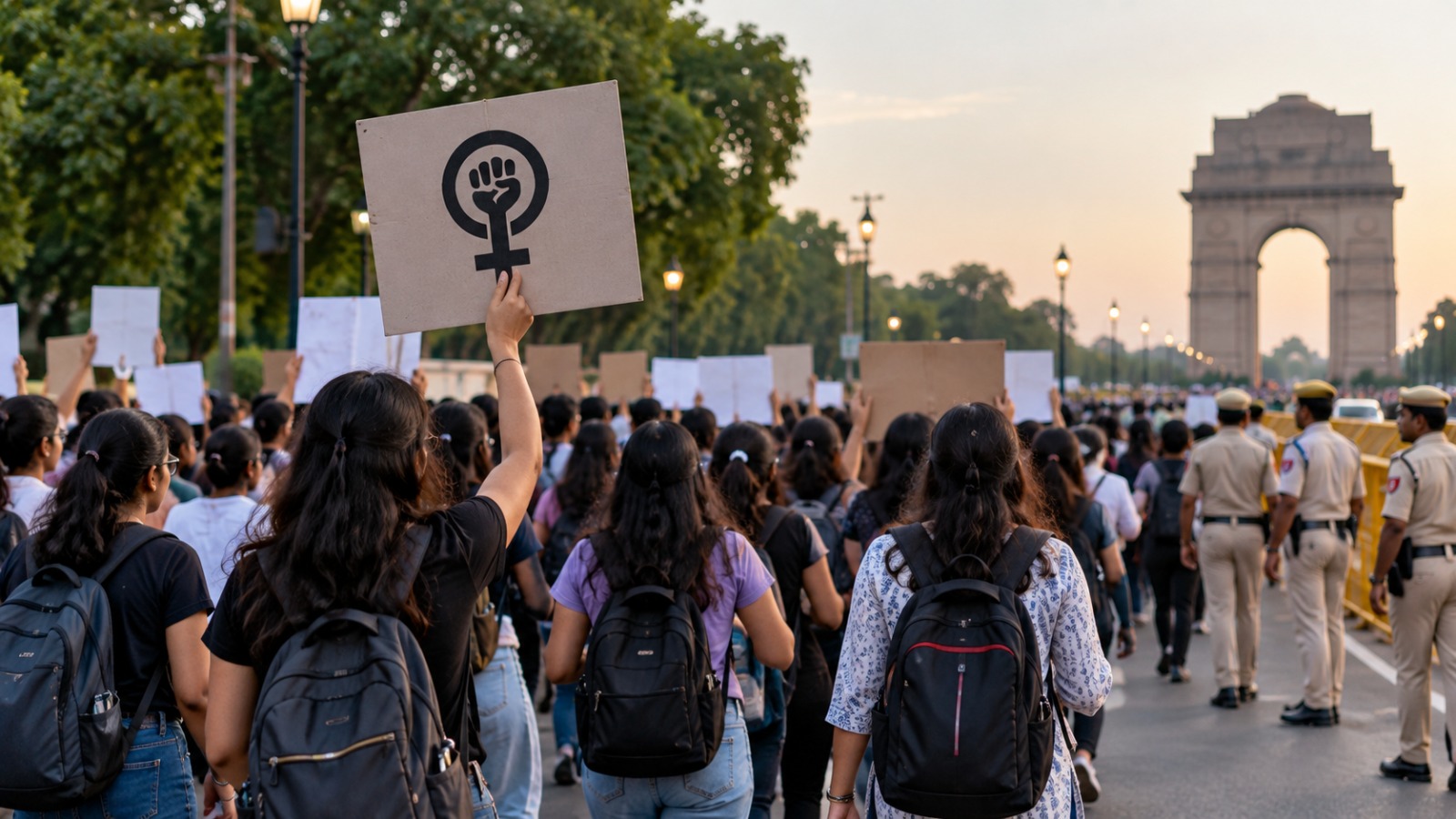
The Delhi women safety protests have brought renewed attention to security in public spaces after the alleged sexual assault of a 17-year-old girl at Aastha Kunj Park in South Delhi. Delhi University students from colleges including Lady Shri Ram College, Gargi College, Miranda House and Kamala Nehru College have held marches calling for stronger safety measures for women and children.
The protests are not limited to the immediate incident. Students have raised concerns about poorly lit roads, safety around college gates, public transport, police presence and the security of routes used by students travelling between campuses, Metro stations, markets, hostels and paying-guest accommodation.

The developments have also prompted authorities and educational institutions to review security arrangements in the affected areas.
What Happened in Delhi?
The recent protests followed the alleged sexual assault of a 17-year-old girl inside Aastha Kunj Park in the Kalkaji area of South Delhi. The park is located close to Lady Shri Ram College for Women, and the incident led the college to temporarily shift classes online while seeking increased police patrolling around the campus.
The case has since become a wider discussion about the safety of public spaces in Delhi. Residents and student groups have pointed to concerns including lighting, security personnel, monitoring and the condition of some areas around parks and educational institutions.
These concerns are based on accounts reported by residents and students and should be distinguished from findings established by investigators.
The incident also prompted further security measures. Delhi Police reported intensified joint foot patrolling and park checking to strengthen public and women’s safety.
Why Are Delhi Students Protesting?
The Delhi women safety protests have focused on a question that goes beyond one location: how safe are the everyday routes that women use to study, work, travel and return home?
On September 25, nearly 200 Delhi University students marched along areas near August Kranti Marg, according to reports. Students from several colleges participated, and the march was followed by open consultations on a charter of demands.
Students have described safety concerns around roads, buses, autos, Metro travel and areas surrounding their colleges and accommodation. Some have also raised concerns about harassment and inadequate security infrastructure around educational institutions.
These are statements and concerns raised by protesters and should not be treated as independently established facts in every individual case.
The protests therefore place attention on the broader question of whether women can access public spaces without having to significantly alter their daily routines because of safety concerns.
5 Key Demands Raised Around Women’s Safety
1. Better Street Lighting and Visibility
One of the recurring concerns raised after the Aastha Kunj Park incident has been lighting in and around public spaces.
Students and residents have highlighted poorly lit stretches near educational institutions and parks. Delhi University student representatives have also spoken about efforts to improve street lighting on a road behind Lady Shri Ram College.
Good lighting does not by itself prevent crime, but visibility can form part of a wider public-safety system by making streets, entrances and pathways easier to monitor.
For students who travel after classes, coaching sessions, library hours or extracurricular activities, the condition of the route between a campus and a transport point can be as important as security inside the institution itself.
2. Stronger Police Patrolling in Vulnerable Areas
Students have also called attention to the need for visible security around locations where people regularly travel or gather.
Following the incident, Delhi Police said it had intensified joint foot patrolling and park checking. Students also reported increased patrolling in areas including National Park and Vikram Vihar, along with strengthened Pink Squad patrolling.
The Delhi Lieutenant Governor also directed a comprehensive safety audit of parks across the capital, with officials asked to review lighting, security arrangements, cleanliness and patrolling.
The effectiveness of such measures will depend on how consistently vulnerable locations are identified, monitored and maintained.
3. Safer Routes Around Colleges and Transport Points
For many students, safety does not begin and end at the college gate.
The journey may involve walking from a hostel or paying-guest accommodation to a bus stop, travelling by Metro, taking an auto-rickshaw and then walking through a poorly lit road before reaching home.
Students participating in the Delhi protests have specifically spoken about concerns along roads, buses, autos and areas around paying-guest accommodation.
This has increased attention on the idea of location-specific safety planning. Rather than treating an entire neighbourhood as equally safe or unsafe, authorities can identify particular stretches where students and residents report recurring concerns and examine lighting, visibility, transport access, emergency response and police presence.
4. Faster Emergency Support and Communication
Another issue emerging from the protests is the need for people to know where and how to seek help during an emergency.
Students have described relying on personal safety practices such as travelling in groups and sharing live locations with friends or family. These individual measures can provide support, but they also highlight the importance of accessible institutional emergency systems.
The discussion around women’s safety therefore includes more than police deployment. It also involves communication between educational institutions, police authorities and students when a security concern is reported.
Lady Shri Ram College, for example, said it was coordinating with Delhi Police after the incident and sought increased patrolling around the campus and nearby areas.
5. Safer Public Spaces Without Restricting Women’s Mobility
The protests have also raised a debate about how safety measures should be designed.
Organisers of the September 25 march argued that restrictions on women’s access to public spaces, including curfews or limitations on movement, do not address the underlying safety concerns. They called instead for measures such as better street lighting, accessible public transport and the ability of women and gender minorities to use public spaces freely.
This is an important distinction in the current discussion. Safety measures can involve restricting access, or they can focus on improving the conditions of the public space itself.
The choice of approach is a matter for authorities and institutions, but the protests have clearly placed public-space design and women’s mobility at the centre of the conversation.
The discussion also connects with the wider conversation around women-led development and women’s participation in India’s growth.
What Official Data Says About Women’s Safety in Delhi
The recent protests are taking place against a larger backdrop of registered crimes against women in the national capital.
According to data provided by the Ministry of Home Affairs in the Rajya Sabha, Delhi recorded 12,458 registered crimes against women in 2025. The corresponding figures were 13,208 in 2023 and 13,195 in 2024.
The same official response reported that 1,227 crimes against elderly people and 7,413 crimes against children were registered in Delhi in 2025. These figures represent cases registered with the police and should not be interpreted as a complete measure of every safety concern experienced by residents.
The Ministry of Home Affairs also reported 14,140 vacant Delhi Police posts against a sanctioned strength of 97,331 as of March 12, 2026. The government response also addressed questions about women help desks, cyber cells and resources at police stations.
These numbers provide a broader statistical context for the concerns being raised in the protests, while the recent demonstrations have focused more specifically on everyday safety in public spaces.
What Delhi Police and Authorities Are Doing
Authorities have responded with a combination of policing and infrastructure-related measures.
Delhi Police has reported intensified foot patrolling and park checking. The force has also listed measures related to public and women’s safety in its recent press releases.
The Delhi Lieutenant Governor directed authorities to conduct a safety audit of parks across the capital. The review was reported to include lighting, security arrangements, cleanliness and patrolling.
Educational institutions have also taken steps in response to the incident. Lady Shri Ram College temporarily moved classes online and requested increased police patrolling around the campus and nearby areas.
These measures will now face the practical test of implementation: whether identified safety gaps are corrected and whether security arrangements continue after immediate public attention moves elsewhere.
Why Safer Public Spaces Matter
Women’s safety is closely connected to how people use a city.
A student may need to attend an evening class, a worker may return home after a late shift, or a resident may need to use public transport after dark. When people change their movements because they are concerned about poorly lit streets, isolated areas or inadequate security, the issue affects more than individual journeys.
The Delhi protests have brought this everyday dimension of safety into focus.
The students’ demands also highlight the importance of looking beyond individual institutions. A college can improve security inside its campus, but students still have to travel through public roads, use transport systems and access neighbourhood facilities.
That makes cooperation between educational institutions, police, civic authorities and transport agencies important when identifying and addressing safety gaps.
What Happens Next?
The immediate response to the Delhi women safety protests includes increased patrolling, park checks, safety audits and discussions between institutions and police.
The longer-term question is whether these measures result in sustained improvements in the places students and residents identify as vulnerable.
For Delhi, that could mean regularly reviewing lighting, CCTV coverage where appropriate, police patrols, emergency access, public transport connections and the condition of routes around educational institutions and residential areas.
The recent protests have made one issue clear: for students, women’s safety is not limited to what happens inside a college campus. It extends to the roads, parks, transport systems and public spaces that connect everyday life.
As authorities continue their investigations and safety reviews, the focus will increasingly be on whether the measures announced after the incident translate into safer and more accessible public spaces across the capital.