
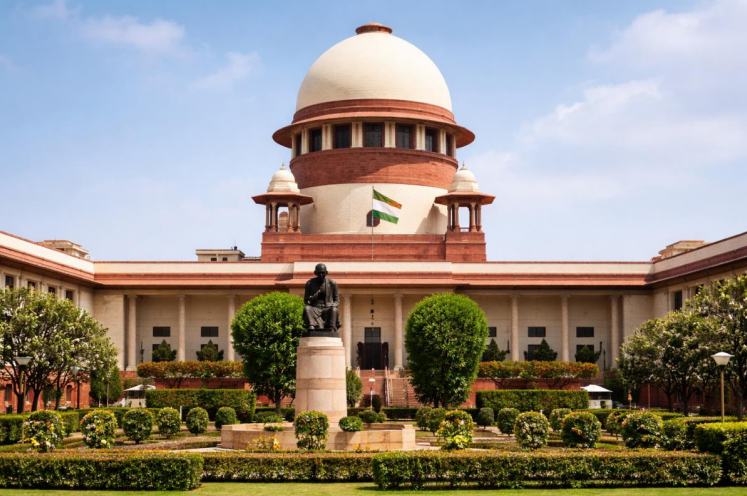
In a significant development shaping India’s digital-rights landscape, the Supreme Court of India delivered a stern warning to Meta platforms over the controversial “take-it-or-leave-it” privacy policy used in its messaging service WhatsApp privacy policy.
During today’s hearing, the Bench observed that no corporation—regardless of scale, market power or global presence—can compel Indian citizens to surrender their fundamental right to privacy as a precondition to using a digital service.


The Court’s remarks came as part of ongoing proceedings regarding WhatsApp privacy policy 2021 update, which mandated that users must accept revised data-sharing terms to continue accessing services. The Bench noted that despite subsequent revisions, the underlying issue of user choice and informed consent remains unresolved.
Highlighting India’s evolving legal landscape, especially following the enactment of the Digital Personal Data Protection Act, the Court emphasised that platforms operating in India must align with constitutional protections rather than drafting policies that indirectly coerce users into compliance.
Judicial Observations Underscore Privacy as a Fundamental Right
The judges reiterated that privacy, recognised as a fundamental right under Article 21 in the landmark 2017 judgment on data protection, cannot be diluted through unilateral corporate WhatsApp privacy policy design. The Bench said, in clear terms, that private companies cannot “play with” the privacy of citizens or treat consent as a procedural formality.
During the hearing on February 3, the Court questioned whether WhatsApp privacy policy provides users with genuine choice, noting that the service’s enormous penetration in India leaves citizens with little practical alternative.
The Bench underscored that “a dominant digital platform must not leverage its market position to force users into accepting data-sharing norms without meaningful consent.”
Senior counsel appearing for Meta argued that the WhatsApp privacy policy complies with international standards and mirrors frameworks used in other jurisdictions. However, the Bench stressed that India’s constitutional protections supersede global commercial practices and that compliance with local law requires heightened transparency, minimal data collection and explicit user control.
Legal analysts following the case remarked that the Court’s stance signals a growing judicial willingness to intervene in digital-market practices that may compromise fundamental rights, particularly amid rapid technological expansion and rising concerns over data monetisation.
Examination of WhatsApp’s Data Practices and Regulatory Intersections
The Court sought detailed clarification on the categories of personal data collected by WhatsApp privacy policy, whether metadata is shared with its parent organisation Meta Platforms, and how such information is used in advertising or algorithmic profiling.
The Bench referenced recent parliamentary discussions highlighting the need for greater scrutiny over cross-platform data integration across Meta’s apps operating in India.
Regulatory bodies, including the Ministry of Electronics and Information Technology, have earlier raised concerns that WhatsApp privacy policy creates an imbalanced framework where Indian users receive fewer privacy protections than those offered in the European Union under GDPR provisions.
Today’s hearing revived this discussion, with the Court observing that Indian consumers should not be placed at a disadvantage compared to global users simply due to jurisdictional differences.
The Bench also took note of submissions by digital-rights organisations arguing that metadata—such as message timestamps, device identifiers and interaction patterns—forms a critical layer of personal information that cannot be categorised as “non-sensitive” simply because the platform uses end-to-end encryption for message content.
The judges indicated that the Court will examine whether metadata harvesting aligns with constitutional safeguards and Indian regulatory standards.
Sources close to the regulatory process indicated that the Court’s observations could significantly influence upcoming rulemaking under the Data Protection Act, particularly related to informed consent, cross-border data transfer and proportionality of data collection.
Implications for Digital Governance, Tech Companies and Consumers
The Supreme Court’s intervention is widely seen as a pivotal moment for digital governance in India, particularly as global technology firms expand their presence in the country’s rapidly growing digital economy.
Legal experts note that the Court’s remarks underscore a larger shift toward user-centric governance, where privacy, transparency and accountability must be central to platform operations.
Major Indian WhatsApp privacy policy think tanks have argued that the judgment could set new benchmarks for corporate data policies, compelling platforms to offer more granular privacy controls, greater clarity on data usage and meaningful opt-out mechanisms.
Industry executives acknowledged that India’s regulatory climate is increasingly moving toward stringent compliance expectations, especially in light of the country’s large-scale digital-infrastructure initiatives.
For Indian users, the Court’s observations provide renewed confidence that constitutional protections extend meaningfully into the digital sphere. Several public-interest groups expressed optimism that the insistence on fair consent practices will lead to more user-friendly privacy tools and tighter scrutiny of data-sharing arrangements among multinational technology companies.
From a geopolitical standpoint, scrutiny over Meta’s WhatsApp privacy policy also aligns with global concerns about the accountability of large digital platforms, as countries across Europe, North America and parts of Asia tighten regulatory controls over privacy standards, algorithmic transparency and competition behaviour.
Conclusion
The Supreme Court’s warning to WhatsApp privacy policy and Meta marks a defining moment in India’s digital-rights trajectory, reaffirming that the right to privacy cannot be compromised by corporate design or commercial incentives.
By insisting on lawful, transparent and user-consensual practices, the Court has laid the groundwork for stronger digital governance in the world’s fastest-growing internet market.
As the Bench prepares to issue further directions on February 10, the upcoming hearings are expected to influence how global technology companies operate in India for years to come.
Experts believe the case may establish new jurisprudence on digital consent, platform accountability and constitutional protections in the online ecosystem, signalling a new phase of user-centric regulation in India’s digital future.


