
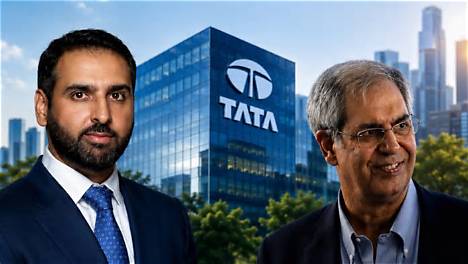
The Tata Trusts row has intensified after chairman Noel Tata and his son Neville Tata filed caveats in the Bombay High Court and Mumbai City Civil Court. The legal developments come amid a widening dispute over trustee appointments, governance practices, decision-making authority and the future of Tata Sons, the holding company of the Tata Group.
Tata Trusts Row Deepens as Internal Disagreements Reach the Courts
The dispute within Tata Trusts has entered a significant new phase, with legal precautions taken by Noel Tata and Neville Tata highlighting the growing complexity of disagreements within the charitable institutions that control a majority stake in Tata Sons. The two have filed caveats in Mumbai courts following complaints by fellow trustees Venu Srinivasan and Vijay Singh to the Maharashtra Charity Commissioner. The complaints raise questions about the administration of the Sir Dorabji Tata Trust, the status of certain trustees and the extent of the trust’s involvement in Tata Sons’ commercial and strategic decisions.


The latest developments have brought the governance of Tata Trusts into the spotlight, particularly because of its central role in one of India’s largest business groups. Tata Trusts is not simply a philanthropic organisation. Its constituent trusts collectively hold approximately 66% of Tata Sons, giving them considerable influence over the holding company’s ownership and long-term direction. As a result, disagreements over trust administration can have implications for corporate leadership, shareholder decisions and the broader governance structure of the Tata Group.
The dispute has also developed alongside disagreements over the possible listing of Tata Sons on the stock market. While Noel Tata and other trustees have argued for exploring alternatives to a public listing, differences have emerged over the interpretation of earlier decisions and the appropriate response to regulatory requirements. The combination of legal complaints, governance questions and strategic disagreements has made the Tata Trusts row an important development in India’s corporate landscape.
Noel Tata and Neville Tata File Legal Caveats
Noel Tata, chairman of Tata Trusts and the Sir Dorabji Tata Trust, and his son Neville Tata have taken precautionary legal steps by filing caveats in the Bombay High Court and Mumbai City Civil Court. The filings are intended to ensure that they are given an opportunity to present their side before courts pass orders in matters arising from the dispute.
A caveat is a procedural legal measure that allows an interested party to request notice and a hearing before certain orders are issued. It does not automatically initiate a lawsuit, establish wrongdoing or determine the merits of the allegations. In this case, the filings indicate that Noel and Neville Tata are preparing for the possibility of further legal proceedings connected with the complaints against the trust.
The move follows earlier caveats filed in connection with proceedings before the Maharashtra Charity Commissioner. The complaints submitted by Venu Srinivasan and Vijay Singh have brought several questions about trust administration and decision-making into the regulatory process. The caveats are therefore intended to safeguard the parties’ opportunity to respond as the matter develops.
The legal action has attracted attention because it involves senior figures within the Tata Trusts network. Noel Tata occupies a prominent leadership position, while Neville Tata is also a trustee of the Sir Dorabji Tata Trust. Their roles place them at the centre of the debate over trustee appointments, authority and the relationship between the charitable trusts and Tata Sons.
However, the caveats should not be interpreted as evidence that the courts have found fault with the trust or its leadership. The allegations remain subject to the appropriate regulatory and legal processes, and any conclusions will depend on the evidence and decisions that emerge from those proceedings.
Venu Srinivasan and Vijay Singh Raise Governance Questions
The current dispute gained momentum after Venu Srinivasan and Vijay Singh raised concerns about the governance and administration of the Sir Dorabji Tata Trust. Their complaints to the Maharashtra Charity Commissioner seek scrutiny of matters including the appointment and continued status of certain trustees, Noel Tata’s position within the trust structure and the trust’s involvement in Tata Sons’ affairs.
One of the central questions concerns the status of perpetual trustees and the procedures governing leadership appointments. Srinivasan has questioned the basis on which Noel Tata assumed and continues to hold the chairmanship of Tata Trusts, along with issues relating to trustee participation in important decisions. The complaints also raise questions about the appointment of Neville Tata and the way certain responsibilities have been exercised.
These concerns touch on the fundamental principles governing charitable trusts. Trustees are expected to act within the framework of the relevant trust deeds, applicable legislation and their fiduciary responsibilities. They must also ensure that decisions are consistent with the purposes for which the trusts were established.
At the same time, the allegations must be distinguished from established findings. A request for an inquiry does not mean that the conduct being questioned has been found unlawful or improper. The regulator must consider the relevant documents, explanations and applicable rules before determining whether any further action is warranted.
The disagreement has also raised questions about how differences among trustees should be resolved. Institutions with substantial assets and significant corporate shareholdings require clear procedures for deliberation, voting and recording decisions. When trustees disagree about these processes, regulatory scrutiny can become an important mechanism for clarifying responsibilities.
Maharashtra Charity Commissioner Awaits the Trust’s Response
The Maharashtra Charity Commissioner has become a central figure in the developing dispute. The authority is examining complaints concerning the administration and governance of the Sir Dorabji Tata Trust, making the regulatory process an important next step in determining how the allegations will be addressed.
The trust and the concerned parties were initially required to respond by October 12, 2026. Following a request for additional time, the deadline was extended to October 19, 2026. The extension gives the trust and its representatives additional time to prepare their submissions and address the concerns raised by the complainants.
The response will be significant because it can provide the trust’s account of the decisions and procedures being questioned. It may also clarify the legal and administrative basis for the positions taken by the trustees. The commissioner will then have to consider the submissions in accordance with the relevant regulatory framework.
The outcome should not be presumed in advance. Depending on the material presented, the authority may consider whether additional information, clarification or further proceedings are necessary. Any subsequent steps will depend on the applicable law and the regulator’s assessment.
The regulatory process also highlights the importance of accountability in the administration of charitable institutions. Where a trust holds substantial assets and exercises significant shareholder influence, questions about governance can attract attention beyond its immediate beneficiaries. The way such concerns are addressed can affect confidence in the institution’s administrative framework.
Why Tata Trusts Holds Such an Important Position
Tata Trusts occupies a distinctive position in India’s corporate and philanthropic landscape. Its constituent charitable institutions collectively own approximately 66% of Tata Sons, the principal holding company of the Tata Group. This ownership structure connects the trusts’ philanthropic responsibilities with their role as influential shareholders in a major business conglomerate.
Tata Sons sits at the centre of a group with operations across information technology, automobiles, steel, consumer products, financial services, aviation and other sectors. Its companies serve customers in India and international markets, employ large workforces and participate in industries that are important to economic growth.
Because Tata Trusts holds a majority stake in Tata Sons, its decisions can influence the holding company’s governance and long-term strategic direction. Matters involving shareholder approval, board composition and the company’s ownership structure can therefore become especially important when trustees disagree.
The structure also creates responsibilities that must be managed carefully. The trusts must preserve their charitable objectives while exercising their rights as shareholders in accordance with applicable laws and corporate governance arrangements. Decisions relating to Tata Sons must be considered within the appropriate legal and corporate framework.
This relationship explains why the current dispute has attracted attention from business observers. The disagreement is not limited to the personal or administrative positions of individual trustees. It also concerns how a major shareholder institution exercises its authority over a corporate holding company while remaining accountable for its charitable responsibilities.
Tata Sons IPO Debate Adds Another Layer to the Dispute
One of the most important issues surrounding the Tata Trusts row is the future of Tata Sons and whether the company should pursue a public listing. The debate has gained urgency following regulatory developments involving the Reserve Bank of India and Tata Sons’ classification as an upper-layer non-banking financial company, or NBFC.
The RBI declined Tata Sons’ application to surrender its registration in September 2026. The development brought renewed attention to the company’s regulatory position and the options available to it. A public listing has been discussed as one possible route, but the precise regulatory and corporate steps required must be assessed against the applicable rules and the company’s circumstances.
Tata Trusts has maintained that Tata Sons should explore alternatives to listing. In a statement dated September 17, 2026, the trusts said that the company’s board had agreed to examine all available options rather than treating a public listing as the only course of action. The trusts also referred to an earlier board decision, taken in March 2024, to keep Tata Sons unlisted.
The disagreement is partly about how those earlier decisions should be interpreted and what the RBI’s communication means for the company’s future. Noel Tata and other trustees have argued that the regulatory communication does not, by itself, require Tata Sons to pursue a listing. The question of whether other options can adequately address the company’s regulatory obligations remains an important consideration.
The IPO debate matters because a public listing could change Tata Sons’ disclosure obligations, ownership dynamics and relationship with investors. Remaining unlisted, on the other hand, would preserve the existing ownership structure but would still require the company to meet whatever regulatory obligations apply to it.
The issue is therefore more complicated than a simple disagreement over whether a company should enter the stock market. It involves the interpretation of regulatory requirements, the powers of shareholders, the provisions of corporate governing documents and the long-term objectives associated with the Tata ownership model.
Disagreement Over Corporate Control and Shareholder Rights
The relationship between Tata Trusts and Tata Sons is central to understanding the wider dispute. Tata Trusts’ majority shareholding gives it substantial influence, but the exercise of shareholder rights must operate within the company’s governing documents and the applicable legal framework.
The trusts’ leadership has argued that its position as a controlling shareholder gives it the right to express views on significant strategic questions. From this perspective, discussions about Tata Sons’ ownership structure and long-term direction are legitimate matters for shareholder consideration.
The complaints by Srinivasan and Singh, meanwhile, raise questions about the boundaries of trust governance and the participation of trustees in corporate decisions. The dispute illustrates the difficulty of distinguishing between a shareholder’s legitimate oversight responsibilities and questions about how decisions are made within the trust itself.
These questions become particularly significant when the holding company is considering major changes to its ownership structure or regulatory status. Decisions that may affect the long-term interests of the company require careful consideration of the powers assigned to its board, the rights of shareholders and any approvals required under the governing documents.
The dispute also underscores the importance of consistent procedures. When decisions are challenged, written records, clearly documented resolutions and transparent explanations can help establish how the institution arrived at a particular position. The relevant legal documents and evidence will be important in determining the issues raised by the trustees.
Leadership Questions at Tata Sons
The debate over Tata Sons’ future has also brought leadership continuity into focus. N. Chandrasekaran, who serves as chairman of Tata Sons, remains an important figure in the group’s corporate structure. His leadership and the process governing his reappointment have become part of the wider discussion about the relationship between Tata Trusts and the holding company’s board.
In September 2026, Tata Sons’ board considered Chandrasekaran’s reappointment for another five-year term. Reports on the decision described a 4–1 vote in favour, with Noel Tata opposing the proposal. Tata Trusts subsequently questioned the validity of the decision, referring to provisions in Tata Sons’ Articles of Association concerning approval requirements for trust-nominated directors.
The disagreement raises questions about the interpretation of the company’s governing documents and the relationship between board decisions and shareholder influence. The board has responsibilities for the company’s management and strategy, while shareholders exercise their rights through the mechanisms provided by law and the company’s constitutional documents.
A dispute over the validity of a board decision can create uncertainty about corporate governance even when the company’s operating businesses continue to function normally. It can also lead to closer scrutiny of the procedures followed in major appointments and strategic decisions.
The eventual resolution will depend on the relevant documents, the positions of the parties and any legal or corporate steps that follow. Until the outstanding issues are clarified, it is important to distinguish reported disagreements from a final determination of the validity of the decision.
Possible Implications for the Wider Tata Group
The Tata Group’s size and diversity mean that developments at Tata Sons attract attention across several industries. The group includes companies operating in technology, manufacturing, automotive production, consumer services and other sectors. As a result, questions about the holding company’s governance can have implications for the group’s broader strategic environment.
However, a dispute among trustees does not automatically mean that the operating companies will experience immediate disruption. Individual Tata companies have their own boards, management teams, business strategies and regulatory responsibilities. Their day-to-day performance continues to depend on operational execution, market conditions, customer demand and financial management.
The more immediate concern is whether prolonged disagreements could complicate decisions at the holding-company level. Strategic investments, ownership changes and important governance matters may require coordination between Tata Sons’ board and its shareholders. Uncertainty about approval procedures could make some decisions more complex.
Investors should also avoid treating the Tata Trusts dispute as a direct indicator of the performance of every Tata Group stock. Listed companies have different business models, financial positions and market exposures. The implications of any development at Tata Sons will depend on the individual company’s relationship with the holding company and the decisions that ultimately follow.
For business partners and employees, continuity of leadership and clear communication can be important in maintaining confidence. A transparent resolution of the dispute would help clarify the decision-making framework and reduce uncertainty about the group’s governance arrangements.
Corporate Governance Lessons From the Tata Trusts Dispute
The Tata Trusts row offers a broader illustration of the challenges that can arise when a philanthropic institution also exercises substantial influence over a major corporate group. Such arrangements require a clear separation of responsibilities, reliable decision-making procedures and a shared understanding of the legal obligations that apply to trustees.
Good governance involves more than compliance with formal rules. It also requires decisions to be documented, responsibilities to be clearly allocated and disagreements to be handled through established processes. When several trustees have different views about a strategic issue, the governing documents and applicable law provide the framework for resolving those differences.
The dispute also demonstrates why trustee appointments and voting procedures can become important issues. The legitimacy of decisions may depend on whether the correct process was followed, whether the relevant people were entitled to participate and whether the decision fell within the institution’s authority.
For other charitable institutions with significant investments, the situation highlights the importance of regularly reviewing governance arrangements. Clear policies can help ensure that charitable objectives remain central while shareholder responsibilities are exercised appropriately.
At the same time, governance disputes should be evaluated on their specific facts. The presence of disagreement does not automatically establish a breach of duty. The relevant authorities must assess the evidence, governing documents and legal standards before reaching conclusions.
Philanthropic Responsibilities Remain a Central Consideration
Tata Trusts has a long history of supporting initiatives in healthcare, education, rural development, nutrition and social welfare. Its charitable work forms a significant part of its institutional identity and is closely associated with the Tata name.
The governance dispute has therefore raised questions about how the trusts can maintain their philanthropic responsibilities while resolving disagreements over administration and shareholder decisions. Their role involves managing charitable assets and supporting public-benefit activities, while also exercising the rights associated with their investment in Tata Sons.
It is important, however, not to assume that the dispute has automatically interrupted charitable programmes. Any effect on specific initiatives would need to be established through concrete evidence. The existence of disagreement among trustees is not sufficient to conclude that beneficiaries or projects have experienced disruption.
The priority for the trusts will be to address the issues through the appropriate procedures while maintaining their institutional responsibilities. A clear and legally sound resolution would help reinforce confidence in their administration and provide greater certainty about the relationship between their charitable work and corporate ownership.
What Happens Next in the Tata Trusts Row?
The next important development is the regulatory process involving the Maharashtra Charity Commissioner. The Sir Dorabji Tata Trust and the concerned parties were given until October 19, 2026, to respond to the complaints filed by Srinivasan and Singh. The regulator’s consideration of those submissions will be an important step in determining whether further action is required.
The court caveats filed by Noel and Neville Tata provide a separate procedural safeguard. If related applications are brought before the courts, the filings are intended to ensure that the affected parties receive an opportunity to be heard before relevant orders are issued. The caveats do not settle the dispute or predetermine the outcome.
Attention will also remain on Tata Sons’ regulatory position, the debate over a possible IPO and questions concerning corporate leadership and shareholder approval. These matters involve related interests but are not necessarily resolved through a single regulatory or judicial decision.
Further clarification may emerge as the parties submit their responses and the relevant authorities consider the issues. Any final assessment will depend on the applicable law, the trust documents, Tata Sons’ governing provisions and the evidence presented.
For the business community, the developments provide an important reminder that ownership structures and governance arrangements can become significant sources of uncertainty even within established corporate groups. How the parties resolve the current disagreement may influence discussions about the future administration of Tata Trusts and the governance of Tata Sons.
Conclusion: Tata Trusts Row Puts Governance and Corporate Control in Focus
The Tata Trusts row has deepened following the filing of caveats by Noel Tata and Neville Tata in Mumbai courts amid complaints by fellow trustees Venu Srinivasan and Vijay Singh. The dispute has placed questions about trustee appointments, governance practices, decision-making authority and the relationship between Tata Trusts and Tata Sons at the centre of public attention.
The disagreement is unfolding alongside a broader debate about Tata Sons’ regulatory obligations and the possibility of a public listing. With Tata Trusts holding a majority stake in the holding company, the resolution of these issues could have important implications for shareholder relations and long-term corporate governance.
For now, the allegations remain unresolved, and the legal caveats are procedural measures rather than findings on the merits of the dispute. The next stages will depend on the submissions made to the Maharashtra Charity Commissioner, any subsequent legal proceedings and the decisions taken through the appropriate corporate processes.
Ultimately, the episode highlights the importance of transparent governance, clearly defined responsibilities and effective dispute-resolution mechanisms. The way Tata Trusts and its trustees address the outstanding questions will be closely watched, given the institution’s philanthropic role and its influence over one of India’s most prominent business groups.
To read more such news kindly visit : Businesspress