
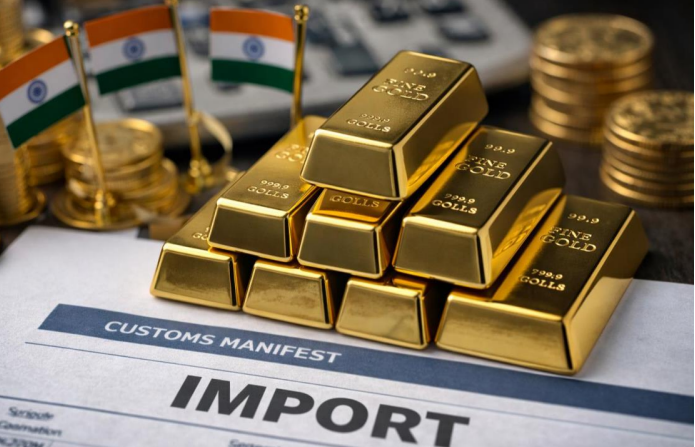
India has moved swiftly to restore stability in its India bullion imports trade by reauthorizing 15 banks to resume imports of gold and silver following a temporary disruption caused by delayed government approvals. The decision, effective from April 2026 through March 2029, marks a crucial policy intervention aimed at ensuring continuity in the country’s precious metals supply chain. The disruption had briefly halted imports, leading to a backlog at ports and raising concerns across financial and commodity markets.
The interruption occurred due to a lapse in authorization orders issued by the Directorate General of Foreign Trade (DGFT), which regulates India bullion imports. As a result, several consignments remained stuck at customs, including more than five tonnes of gold and a substantial volume of silver. The delay highlighted the sensitivity of India’s bullion ecosystem, where regulatory timelines directly influence trade flows, pricing, and market sentiment.


Given India’s position as the world’s second-largest consumer of gold and a leading importer of silver, the policy correction carries significant economic implications. The prompt reauthorization underscores the government’s intent to prevent prolonged disruption in a sector that is closely tied to consumer demand, financial markets, and cultural consumption patterns.
Policy Lapse and Immediate Disruption
The disruption in India bullion imports was triggered by the expiry of previous import authorizations on March 31, 2026, without immediate renewal. This administrative gap led banks to suspend fresh import orders, as regulatory compliance is mandatory for handling precious metals. The absence of valid permissions effectively froze a critical segment of India’s commodity trade.
As shipments arrived at Indian ports during this period, customs authorities were unable to clear them without updated documentation. This resulted in a significant backlog, with over five tonnes of gold reportedly stranded. Silver imports, which are often used for industrial and investment purposes, were similarly affected, compounding the disruption across multiple sectors.
The episode exposed operational vulnerabilities within India’s trade management system, particularly in handling time-sensitive renewals. For a market as large and dynamic as India bullion imports sector, even short-term disruptions can lead to price volatility, supply shortages, and uncertainty among stakeholders.
Government Response and Reauthorization Framework
In response to the disruption, the government acted decisively by issuing fresh authorizations to 15 banks, including major institutions such as , , and . These banks play a central role in facilitating India bullion imports, acting as intermediaries between global suppliers and domestic markets.
The new authorization framework is valid for a three-year period from April 2026 to March 2029, providing a longer-term regulatory window compared to previous cycles. This extended validity is expected to reduce administrative uncertainty and allow banks to plan import strategies more effectively.
By restoring import permissions, the government has ensured the immediate clearance of pending shipments and resumed the normal flow of India bullion imports into the domestic market. The move reflects a pragmatic approach to policy correction, prioritizing market stability and continuity over procedural rigidity.
Market Impact and Economic Significance
The reauthorization has had an immediate stabilizing effect on India bullion imports market. With imports resuming, supply constraints have eased, reducing the risk of price spikes that could have affected both consumers and investors. The clearance of backlogged shipments has also alleviated pressure on logistics and storage systems at major ports.
Gold plays a unique role in India’s economy, serving as both a consumption commodity and a financial asset. Demand is driven by a combination of cultural traditions, investment preferences, and seasonal factors such as weddings and festivals. Any disruption in supply can therefore have cascading effects across retail markets, jewellery businesses, and financial instruments linked to gold prices.
Silver, meanwhile, is increasingly important for industrial applications, including electronics and renewable energy technologies. Ensuring a steady supply of silver is critical for supporting manufacturing and technological growth. The policy correction thus carries implications not only for consumer markets but also for India’s broader industrial ecosystem.
Institutional Role and Banking Sector Involvement
Banks authorized to India bullion imports act as key facilitators in India’s precious metals trade. They source gold and silver from international markets, manage foreign exchange transactions, and supply India bullion imports to domestic dealers and jewellers. The reauthorization of 15 banks ensures that this critical channel remains operational and efficient.
The involvement of major financial institutions such as State Bank of India, HDFC Bank, and ICICI Bank underscores the scale and importance of the India bullion imports trade. These banks possess the infrastructure, expertise, and global networks required to handle large-volume imports while adhering to regulatory standards.
From a financial perspective, bullion imports also influence India’s trade balance and currency dynamics. Gold imports, in particular, are a significant component of the country’s import bill, affecting foreign exchange reserves and current account balances. The resumption of imports must therefore be managed carefully to balance domestic demand with macroeconomic stability.
Outlook
India’s decision to reauthorize gold and silver imports marks a timely intervention that has restored stability to a critical segment of its economy. By addressing the disruption promptly, the government has demonstrated responsiveness to market needs and a commitment to maintaining continuity in trade operations.
Looking ahead, the extended validity of import authorizations provides a more predictable regulatory environment for banks and market participants. However, the episode also highlights the need for improved administrative coordination to prevent similar disruptions in the future. Strengthening systems for timely renewals and communication will be essential for ensuring seamless trade flows.
As global economic conditions remain uncertain and demand for precious metals continues to evolve, India bullion imports policy will play a crucial role in shaping market dynamics. The recent correction not only resolves an immediate issue but also sets the stage for a more stable and resilient trade framework in the years to come.