
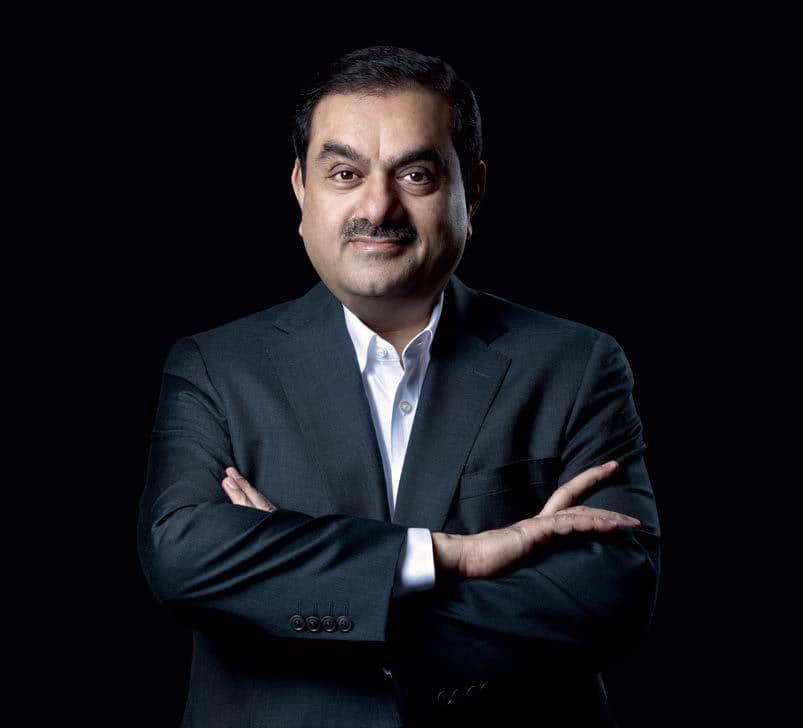
Gautam Adani reclaims top spot as India’s richest, moving ahead of Mukesh Ambani and his family in the latest M3M Hurun India Rich List 2026. According to the ranking, Adani and his family have a reported wealth of approximately ₹9.23 lakh crore ($96 billion).
The development represents a significant change at the top of India’s wealth rankings. Mukesh Ambani and his family, who occupied the first position in the previous edition, are now ranked second with reported wealth of approximately ₹8.63 lakh crore ($90 billion).


Adani’s reported wealth increased by around 13% over the previous year, while Ambani’s family wealth declined by approximately 10%. The difference between the two fortunes illustrates how changes in business valuations and equity markets can quickly alter the rankings of India’s wealthiest individuals.
Adani Moves Ahead of Mukesh Ambani
The latest ranking places Gautam Adani approximately ₹59,400 crore ahead of Mukesh Ambani. While the difference is substantial in absolute terms, the two business families remain among India’s most prominent corporate fortunes.
The movement at the top is closely linked to the market value of companies associated with both business groups. Since a large part of billionaire wealth is based on ownership stakes in listed and privately held businesses, changes in share prices and company valuations can have a major impact on estimated wealth.
The ranking therefore represents a snapshot of wealth based on the methodology and valuation period used by Hurun rather than a fixed measure of personal cash holdings.
Adani Group’s Expanding Business Empire
Gautam Adani’s wealth is closely associated with the growth of the Adani Group, one of India’s major business conglomerates. The group has developed a diversified portfolio spanning infrastructure, energy, logistics, transportation and other strategically important sectors.
Its businesses include ports, airports, power generation, electricity transmission, renewable energy and infrastructure development. The group has also expanded its presence across several areas connected with India’s long-term infrastructure requirements.
The diversified nature of the business portfolio has helped make the Adani Group an important participant in India’s infrastructure and energy landscape. Its companies are involved in sectors that have become increasingly important as India invests in transportation networks, electricity generation, renewable energy and logistics infrastructure.
Infrastructure Remains a Major Growth Area
One of the important factors behind the expansion of the Adani business empire has been its focus on infrastructure. India has been investing heavily in roads, ports, airports, power infrastructure, logistics networks and renewable energy as it seeks to support economic growth.
The Adani Group has built a significant presence in several of these areas. Its infrastructure businesses provide exposure to long-term economic activity and the increasing demand for transportation and energy services.
Ports and logistics, for example, play an important role in India’s international trade. Airports have also become an increasingly important infrastructure segment as domestic and international passenger traffic expands.
Renewable Energy and the Energy Transition
Energy is another major part of the Adani Group’s business interests. The group has invested substantially in renewable energy through Adani Green Energy, with a focus on large-scale renewable power projects.
India’s transition toward cleaner energy has created opportunities for companies operating in solar, wind and other renewable-energy segments. The country’s broader energy transition also requires investment in transmission infrastructure, storage, manufacturing and supporting technologies.
The expansion of renewable energy has therefore become an important part of India’s changing industrial landscape and has contributed to the growth of large infrastructure-focused companies.
India’s Billionaire Population Continues to Grow
Adani’s return to the top comes at a time when the number and combined wealth of India’s richest individuals continue to expand.
The M3M Hurun India Rich List 2026 reportedly includes 1,810 individuals with wealth of at least ₹1,000 crore. The combined wealth of those individuals increased by approximately 12.8% to ₹187.5 lakh crore.
India’s dollar-billionaire population has also reached a new level. According to reports on the latest ranking, the country now has 391 dollar billionaires, an increase of 27 compared with the previous year.
These figures highlight the scale of wealth creation taking place across India’s corporate and entrepreneurial ecosystem.
Technology Creates New Sources of Wealth
While traditional industries continue to dominate India’s wealth rankings, technology and emerging industries are increasingly creating new fortunes.
Artificial intelligence, software, advanced technology and other emerging sectors are becoming important areas for entrepreneurship and investment. Reports surrounding the 2026 Hurun list indicate that AI alone contributed a significant number of new entrants to India’s wealthy population.
This shift reflects the broader transformation of India’s economy, where technology companies and digitally driven businesses are increasingly operating alongside traditional industries such as manufacturing, infrastructure, energy and financial services.
Self-Made Entrepreneurs Remain Significant
Another notable feature of India’s wealth landscape is the contribution of self-made entrepreneurs. According to reports on the 2026 Hurun ranking, self-made entrepreneurs account for approximately 70% of the individuals included in the list.
This indicates that India’s wealth creation is not limited to established business families. Entrepreneurs who have built companies in technology, consumer products, financial services, manufacturing and other sectors are also contributing significantly to the country’s billionaire population.
The growing presence of self-made entrepreneurs also reflects the expansion of India’s startup ecosystem and the increasing availability of capital for businesses with high-growth potential.
Gautam Adani’s Position in India’s Corporate Landscape
Gautam Adani’s return to the top of the wealth ranking comes after a period of significant changes in the valuation of Adani Group companies.
Because much of his reported wealth is connected to his ownership stakes in group companies, movements in the stock market can significantly influence his estimated net worth. This makes the position of India’s richest individual subject to change as market conditions evolve.
The latest ranking should therefore be viewed within the broader context of equity-market valuations and corporate performance rather than as a permanent ranking of personal wealth.
Adani and Ambani Represent Different Business Models
The competition between Gautam Adani and Mukesh Ambani at the top of India’s wealth rankings also highlights the different business strategies followed by their respective groups.
The Adani Group has developed a strong presence in infrastructure, ports, airports, energy, logistics and renewable energy. Reliance Industries, led by Mukesh Ambani, operates across a broad range of sectors including energy, petrochemicals, telecommunications, retail and digital services.
Both groups have expanded beyond their original business areas and have increasingly built diversified portfolios.
Their respective positions also demonstrate how India’s largest business groups are responding to changing economic opportunities, consumer demand, technology and infrastructure requirements.
Why Billionaire Rankings Can Change Quickly
Billionaire rankings often change because estimated wealth is closely connected to asset valuations. When the share prices of companies owned by a billionaire rise or fall, the person’s estimated net worth can change substantially.
Other factors can include private-company valuations, ownership structures, currency movements and changes in the value of other assets.
As a result, being ranked first on a particular wealth list does not necessarily mean that an individual has permanently surpassed another person in overall wealth. Different rankings can also use different valuation dates and methodologies.
What the Latest Ranking Says About India’s Economy
The latest Hurun ranking provides a broader picture of India’s changing business environment. The continued expansion of billionaire wealth reflects the growth of major companies, increased capital-market valuations and the emergence of entrepreneurs across multiple sectors.
Infrastructure, energy, manufacturing and financial services remain important sources of wealth creation. At the same time, technology, artificial intelligence and other emerging industries are opening new opportunities for entrepreneurs.
India’s expanding consumer market, digital economy and infrastructure investment are also creating opportunities for businesses operating at different scales.
Growing Wealth and the Question of Economic Distribution
The increasing wealth of India’s richest individuals also brings attention to the broader issue of wealth distribution. While the growth of large businesses can create employment, investment and economic activity, the concentration of wealth among a relatively small number of individuals remains an important subject of economic discussion.
Wealth rankings therefore provide only one perspective on India’s economic development. They measure the estimated wealth of high-net-worth individuals but do not directly measure household incomes, employment levels, poverty, consumption or the overall distribution of economic gains.
Understanding India’s economic progress requires considering these broader indicators alongside corporate wealth.
What Comes Next for Adani Group
The Adani Group’s future growth will depend on the performance of its businesses across infrastructure, energy, logistics and other sectors. Continued investment in renewable energy and infrastructure could provide opportunities as India’s economy expands and demand for energy and transportation increases.
At the same time, large infrastructure projects require significant capital and face regulatory, financing and market-related considerations. The performance of individual group companies will therefore remain important for the future valuation of the conglomerate and, consequently, the reported wealth of its principal shareholder.
Conclusion
Gautam Adani has reclaimed the position of India’s richest person, according to the M3M Hurun India Rich List 2026, with his family reporting wealth of approximately ₹9.23 lakh crore ($96 billion).
He has moved ahead of Mukesh Ambani and his family, whose reported wealth stands at approximately ₹8.63 lakh crore. The change reflects the dynamic nature of billionaire wealth, where fluctuations in business valuations and financial markets can significantly alter rankings.
More broadly, the latest Hurun list highlights the continued expansion of India’s high-net-worth population. With 1,810 individuals included in the list and 391 dollar billionaires, India’s business landscape continues to produce substantial wealth across infrastructure, energy, manufacturing, technology and emerging industries.
Adani’s return to the top is therefore not only a development involving two of India’s biggest business groups but also part of a wider story about the changing structure of wealth creation in the Indian economy.
To read more such news kindly visit: Businesspress