
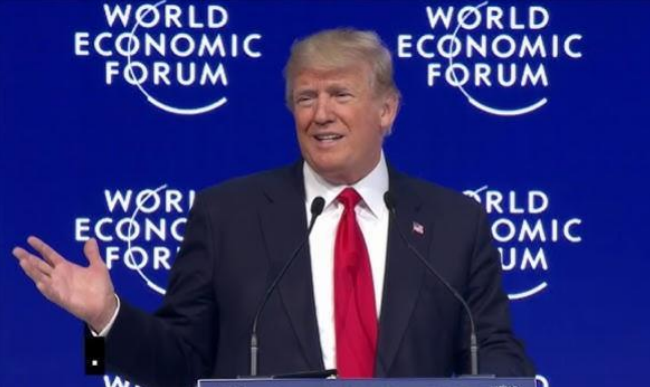
President Donald J. Trump Greenland appearance at the 56th Annual World Economic Forum in Davos crystallized a foreign-policy flashpoint that has dominated early 2026: the renewed U.S. push to gain strategic control of Greenland, the world’s largest island and a semi-autonomous territory of the Kingdom of Denmark. His remarks reinflamed debates over Arctic geopolitics, NATO cohesion, and the future of North Atlantic security.
In a lengthy address spanning more than 70 minutes, Trump Greenland combined combative rhetoric with carefully timed diplomatic concessions. The result both intensified the international spotlight on U.S. Arctic strategy and temporarily defused what had been shaping into a major trade dispute between Washington and its closest European allies.


Strategic Imperatives and Presidential Rationale
Trump Greenland framed Greenland as indispensable to “the security architecture of the 21st century.” The island’s vast landmass nearly 2.1 million square kilometers lies at the nexus of key Arctic sea routes, emerging shipping passages, and rare-earth mineral reserves that are increasingly vital to global technology supply chains.
Although he had previously floated the idea of “purchasing” the island during an earlier term, the Davos address sharpened his strategic justification. Trump Greenland argued that controlling Greenland would strengthen U.S. missile-detection capabilities, bolster NATO’s northern flank, and counter growing Russian and Chinese interest in the Arctic. He also referenced integration with U.S. space-based defense systems, positioning Greenland as central to new missile-intercept technologies under development.
Crucially, Trump Greenland ruled out the use of force to acquire the island.
“I won’t use force. I don’t have to, and I don’t want to,” he declared, portraying the matter as one that would be pursued through negotiation, economic engagement, and what he termed “mutually beneficial security arrangements.”
However, critics quickly pointed out that the United States already operates key installations in Greenland, including the Thule Air Base, under long-standing agreements with Denmark. Existing arrangements, they argue, already provide deep U.S. strategic access without altering sovereignty.
Diplomacy, Deterrence, and European Reactions
Much of the tension surrounding the Greenland issue stemmed not only from the objective itself but also from the diplomatic pressure applied by Washington. Prior to Davos, Trump Greenland had announced a sweeping set of tariff threats targeting eight European NATO allies—including Denmark, France, Germany, the UK, and the Netherlands—unless they agreed to “open discussions” on Arctic security, a phrase widely interpreted as tied to U.S. ambitions for Greenland.
At Davos, he unexpectedly withdrew those tariff threats, crediting what he described as a new “framework of a future deal” on Arctic cooperation reached with NATO leadership. Although details remain vague, the framework appears to emphasize coordinated Arctic defense, intelligence sharing, and joint infrastructure investment.
Despite the temporary relief, European leaders remained firm that Greenland’s sovereignty is not negotiable. Denmark welcomed the de-escalation but reiterated that Greenland is “not for sale,” highlighting that territorial integrity remains a fundamental principle of international law. Danish officials emphasized that while Arctic cooperation is welcome, sovereignty will not be subject to barter or pressure.
Other European leaders expressed deeper concerns, calling for strengthened European strategic autonomy. Several EU officials argued that the episode illustrated the risks of over-reliance on U.S. defense guarantees and advocated for increased European investment in Arctic surveillance, climate research, and northern security initiatives independent of U.S. influence.
Economic Pressure and Global Reaction
Trump Greenland earlier tariff announcements—including a planned 10% levy on select European imports beginning February 1, rising to 25% by June—had triggered immediate unease in global markets. Concerns mounted that a trade confrontation within NATO could destabilize supply chains, particularly in automotive, defense, and high-tech manufacturing sectors where transatlantic integration is deep.
European markets dropped noticeably in early January, while safe-haven assets such as gold saw upward movement as investors sought hedges against geopolitical uncertainty. Analysts warned that even the threat of tariffs between allies could undermine confidence in global trade frameworks already under pressure from inflation and energy volatility.
Trump Greenland decision at Davos to suspend the tariff plan produced immediate stabilization. U.S. and European indices rebounded, and major currency pairs steadied as investors priced in a lower probability of an intra-alliance trade war. Nonetheless, economists cautioned that the underlying geopolitical friction continues to pose risks to market sentiment throughout 2026.
Trump Greenland Perspective
For Greenland itself—home to a population of roughly 57,000—the renewed international focus has amplified long-running debates about the island’s political future. Greenland enjoys significant self-rule under the Danish constitution, and recent elections demonstrated growing support for parties that favor greater autonomy or eventual independence.
Greenlandic leaders consistently emphasize that decisions about the island’s future must be driven by its own citizens, not by external strategic competition. Concerns have emerged that foreign interest in mineral extraction, Arctic shipping lanes, and military positioning could threaten environmental preservation, cultural identity, and long-term economic planning.
Some Greenlandic officials view the increased attention as an opportunity to negotiate stronger economic partnerships and expand global engagement. Others warn that the island risks becoming a geopolitical pawn if major powers pursue their Trump Greenland agendas without genuine consultation. The Davos controversy has intensified these internal discussions and raised the stakes for Greenland’s evolving political identity.
Conclusion
Trump Greenland-centric address at Davos marked a turning point in the modern politics of the Arctic. While immediate tensions eased with the withdrawal of tariff threats, the underlying clash between U.S. strategic ambitions and European insistence on sovereignty remains unresolved.
The episode exposed fractures within NATO and revealed how new strategic priorities—such as climate-driven Arctic accessibility, resource competition, and missile-defense innovation—are reshaping global alliances. It also spotlighted Greenland’s own aspirations, placing its self-determination at the center of one of the most consequential geopolitical debates of 2026.
With new Arctic sea routes opening, superpower rivalries intensifying, and governance frameworks straining under emerging realities, the Greenland question may well become a defining issue of the decade—testing the limits of diplomacy, alliance cohesion, and the balance of power in the rapidly transforming High North.


