
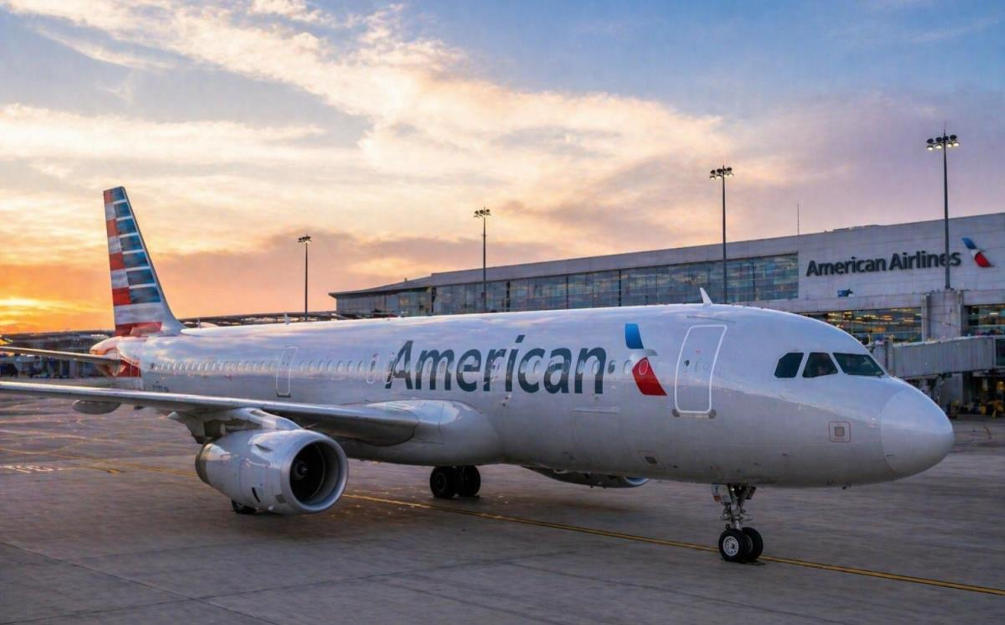
A sharp escalation in global fuel prices has forced American Airlines to revise its 2026 financial outlook, underscoring the growing economic fallout of geopolitical tensions in the Middle East. The airline announced a significant downgrade to its profit forecast, citing a dramatic increase in jet fuel costs triggered by disruptions in global oil supply chains.
At the heart of the issue lies the ongoing Iran-linked conflict, which has disrupted shipping routes through the Strait of Hormuz—one of the world’s most critical oil transit chokepoints. As fuel prices surged to nearly $4 per gallon in the United States, airlines have found themselves grappling with a sudden and substantial increase in operating costs.
Despite strong passenger demand and resilient revenues, the cost shock has proven difficult to absorb. American Airlines now expects an additional $4 billion in fuel expenses in 2026, a figure that has significantly altered its financial trajectory and raised broader concerns about the stability of the global aviation industry.
Fuel Price Surge and Its Immediate Impact
The primary driver behind the airline’s revised outlook is the unprecedented rise in jet fuel prices, which have nearly doubled since the escalation of conflict in the Middle East. Fuel, typically accounting for about 25% of airline operating costs, has become the single most significant pressure point for carriers worldwide.
American Airlines indicated that its fuel bill would increase by more than $4 billion this year alone, a surge that has erased much of its expected profitability. The airline had previously forecast earnings per share between $1.70 and $2.70, but now expects a much wider and weaker range—from a potential loss of 40 cents to a profit of $1.10.
This sudden cost escalation highlights the vulnerability of airlines to external shocks. Unlike other industries, aviation operates on thin margins and relies heavily on fuel price stability. When prices rise rapidly, airlines are often unable to adjust fares quickly enough due to advance ticket sales, leading to immediate pressure on profitability.
Operational Adjustments and Strategic Response
In response to the fuel shock, American Airlines has begun implementing a series of operational adjustments aimed at mitigating financial losses. These include modest capacity reductions, fare increases, and efforts to improve revenue per passenger. The airline expects to recover approximately 50% of the additional fuel costs in the second quarter, with higher recovery rates projected later in the year.
However, the ability to pass on costs to consumers remains limited. Airlines must balance higher ticket prices with the risk of dampening demand, particularly in price-sensitive segments. This creates a strategic dilemma: raising fares too aggressively could reduce passenger volumes, while absorbing costs could erode margins further.
Additionally, the airline is focusing on optimizing route networks by reducing less profitable flights and prioritizing high-demand routes. These adjustments reflect a broader industry trend, where carriers are increasingly relying on operational efficiency and pricing strategies to navigate volatile market conditions.
Industry-Wide Ripple Effects
The challenges faced by American Airlines are not isolated but part of a wider industry trend. Major U.S. carriers, including United Airlines and Alaska Airlines, have also revised their forecasts or withdrawn guidance entirely due to rising fuel costs.
The surge in fuel prices has created a ripple effect across the aviation sector, forcing airlines to reconsider growth plans and investment strategies. Some carriers have already scaled back expansion, while others are exploring additional revenue streams, such as ancillary fees, to offset rising costs.
Globally, the situation has raised concerns about potential disruptions to air travel. Industry analysts warn that sustained high fuel prices could lead to reduced flight availability, higher ticket prices, and increased volatility in airline performance. The current crisis has exposed structural weaknesses in the aviation industry, particularly its dependence on stable energy markets.
Demand Resilience Versus Cost Pressure
Interestingly, the financial strain comes at a time when passenger demand remains strong. American Airlines reported robust revenue growth, with first-quarter revenue reaching nearly $13.9 billion, reflecting sustained travel demand across both domestic and international routes.
This demand resilience has provided some buffer against rising costs, allowing airlines to maintain relatively stable operations despite financial pressures. However, the mismatch between strong demand and rising expenses highlights a key challenge: revenue growth alone may not be sufficient to offset the scale of cost increases.
The situation also underscores the lag effect in airline pricing. Tickets are often sold months in advance, meaning that current fare structures do not fully reflect rising fuel costs. As a result, airlines are only gradually able to adjust pricing, delaying the recovery of margins.
Outlook
The decision by American Airlines to cut its 2026 outlook reflects a broader shift in the global economic landscape, where geopolitical tensions are increasingly shaping corporate performance. The $4 billion fuel cost surge serves as a stark reminder of the aviation sector’s exposure to external shocks, particularly those linked to energy markets.
Looking ahead, the trajectory of the industry will depend largely on the evolution of the geopolitical situation and the stability of oil prices. If tensions persist, airlines may face prolonged financial pressure, leading to structural changes such as consolidation, capacity adjustments, and shifts in pricing strategies.
At the same time, the crisis could accelerate innovation within the sector, including investments in fuel efficiency, alternative energy sources, and operational optimization. While the immediate outlook remains uncertain, the long-term response of the industry will likely shape the future of global aviation in an increasingly volatile world.