
Background of US-Venezuela Relations
US President Donald Trump announced the sUS-Venezuela tanker seizure off the coast of Venezuela on December 11, 2025, marking a significant escalation in Washington’s ongoing pressure campaign against the government of Venezuelan President Nicolás Maduro. The dramatic move underscores the deepening tensions between the United States and Venezuela, as Washington intensifies efforts to increase economic and political pressure on Maduro, who currently faces charges of narco-terrorism in the United States.
The relationship between the United States and Venezuela has been fraught with conflict for years, especially since the 2019 crisis that saw the US and many Western nations recognize opposition leader Juan Guaidó as Venezuela’s interim president. The US has imposed extensive sanctions on Venezuela, targeting its oil sector, which is the backbone of its economy. These sanctions have significantly curtailed Venezuela’s ability to export oil, leading to a deep economic crisis and widespread shortages within the country.


The Seizure of the Oil Tanker
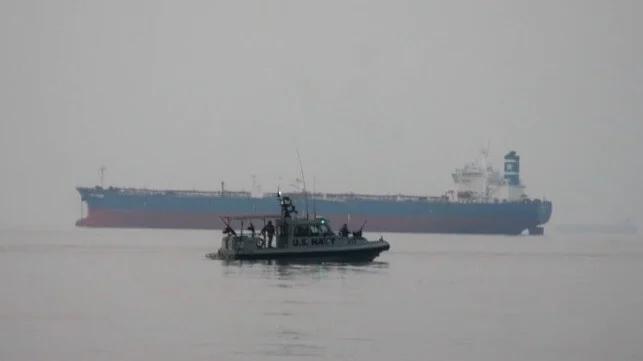
The US-Venezuela tanker seizure off Venezuela’s coast is a bold and unprecedented step in this ongoing standoff. According to US officials, the operation was carried out by the US Coast Guard in international waters and targeted a vessel suspected of transporting Venezuelan oil in violation of US sanctions. The US-Venezuela tanker seizure, reportedly carrying a large shipment of crude oil, was intercepted and diverted to a US-controlled port for further investigation.
President Trump described the action as a “necessary measure” to prevent the Maduro regime from profiting from illicit oil sales, which he claims fund criminal and terrorist activities. The US government alleges that the oil revenues are being used to support Maduro’s government and its alleged involvement in drug trafficking and other illicit activities.
Maduro’s Response and International Reactions
The Venezuelan government has condemned the seizure as an act of piracy and a violation of international law. President Maduro called the move “unlawful aggression” and vowed to take legal action against the United States at international forums. He accused Washington of using its naval power to undermine Venezuela’s sovereignty and economic independence.
The international community has reacted with mixed responses. Some US allies have expressed support for the action, citing the need to combat drug trafficking and hold Maduro accountable for alleged crimes. Others, including several Latin American countries and Russia, have criticized the seizure as an overreach of US authority and a dangerous precedent for maritime law.
Impact on Venezuela’s Economy
The US-Venezuela tanker seizure is expected to have a significant impact on Venezuela’s already struggling economy. The country relies heavily on oil exports for revenue, and the loss of this shipment could exacerbate the ongoing economic crisis. The incident is likely to further restrict Venezuela’s access to international markets and complicate its efforts to revive its oil industry.
Legal and Diplomatic Implications
The legal and diplomatic implications of the seizure are profound. The US government claims that the action is justified under its sanctions regime and international law, which allows for the interception of vessels involved in illicit activities. However, critics argue that the seizure could set a dangerous precedent for the use of force in international waters and undermine the principles of sovereignty and maritime law.
The incident is likely to be the subject of intense diplomatic discussions in the coming days, with Venezuela expected to seek redress through international courts and diplomatic channels. The US, for its part, is likely to defend its actions as necessary to combat drug trafficking and hold Maduro accountable for alleged crimes.
Broader Geopolitical Context
The sUS-Venezuela tanker seizure is part of a broader geopolitical context in which the US is seeking to counter the influence of adversarial regimes and protect its strategic interests. The move reflects Washington’s determination to use all available tools, including economic sanctions and military force, to achieve its foreign policy objectives.
The incident also highlights the ongoing challenges of enforcing international law in a complex and often unpredictable global environment. As the US and Venezuela continue to clash over oil, drugs, and political legitimacy, the world will be watching closely to see how this latest escalation plays out and what it means for the future of US-Venezuela tanker seizure relations.
Conclusion
In summary, US-Venezuela tanker seizure off Venezuela’s coast is a dramatic and controversial move that underscores the deepening tensions between the United States and Venezuela. As both sides prepare for the next phase of their confrontation, the world will be watching closely to see how this latest escalation affects the broader geopolitical landscape.


