
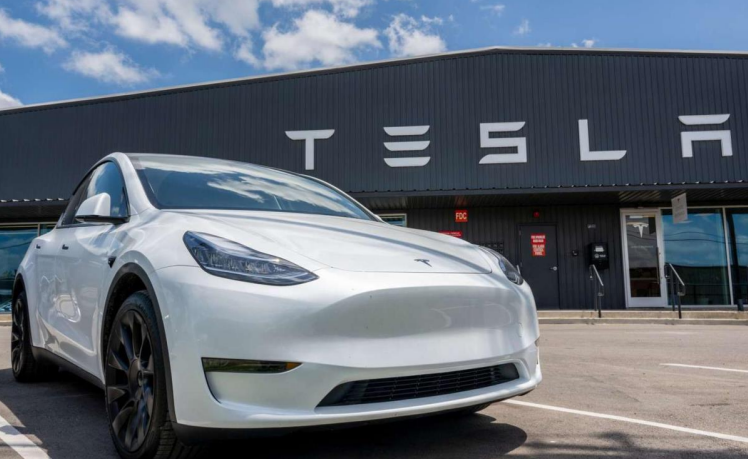
Tesla is once again shifting its strategic direction in the global electric vehicle (EV) market, with fresh reports confirming that the company is developing a new, smaller and more affordable electric vehicle aimed at expanding its reach beyond the premium segment. The move comes at a critical juncture for Tesla, as slowing EV demand, rising competition, and changing consumer dynamics force the company to rethink its product roadmap.
According to sources familiar with the development, the upcoming model will be a compact SUV approximately 4.28 meters in length, positioned below the current Model 3 and Model Y lineup. The vehicle is expected to incorporate cost-saving measures such as a single motor, smaller battery pack, and lighter structural design, enabling Tesla low-cost EV to significantly reduce production costs and price points.


This initiative marks a notable shift from Tesla low-cost EV earlier focus on high-end vehicles and autonomous technologies. While CEO Elon Musk has increasingly emphasized robotaxis and artificial intelligence, the renewed push toward affordability signals Tesla’s recognition of a fundamental market reality: future growth in EV adoption will depend heavily on price accessibility.
Strategic Shift: From Premium to Mass Market
Tesla’s journey toward affordable EVs has been complex and evolving. The company had previously scrapped plans for a $25,000 entry-level vehicle, redirecting its focus toward autonomous driving technologies such as the Cybercab. However, the emergence of new competition particularly from Chinese manufacturers offering low-cost EVs has intensified pressure on Tesla low-cost EV to re-enter the affordable segment.
The new compact EV project reflects a recalibration of priorities. Rather than introducing an entirely new platform, Tesla appears to be leveraging its existing manufacturing ecosystem, optimizing costs through design simplification and production efficiency. Initial manufacturing is expected to begin in Shanghai, with potential expansion to facilities in the United States and Europe.
This strategic pivot underscores Tesla’s need to maintain its dominance in a rapidly evolving market. As EV adoption shifts from early adopters to mainstream consumers, affordability has become the key determinant of growth, forcing even premium-focused brands to rethink their positioning.
Technical Design and Cost Optimization
The proposed low-cost EV is expected to embody Tesla’s philosophy of engineering efficiency. By incorporating a single-motor configuration, the vehicle will reduce both production complexity and component costs. Similarly, a smaller battery pack will lower material expenses, particularly given the high cost of lithium-ion cells.
In addition, Tesla low-cost EV is reportedly focusing on a lighter vehicle architecture, which not only reduces manufacturing costs but also improves energy efficiency and range. These design choices are aimed at achieving a balance between affordability and performance, ensuring that the vehicle remains competitive in a crowded market.
Industry analysts note that Tesla low-cost EV approach differs from traditional automakers, who often rely on feature reduction to lower costs. Instead, Tesla low-cost EV is leveraging vertical integration, software capabilities, and manufacturing innovation to drive down expenses without significantly compromising product quality.
Market Dynamics and Competitive Pressure
The push toward a low-cost EV is being driven by significant changes in the global automotive landscape. EV demand has shown signs of slowing in key markets such as the United States and Europe, while competition has intensified, particularly from Chinese manufacturers like BYD, which offer competitively priced models.
Tesla’s sales performance has also come under scrutiny. Despite remaining a market leader, the company has faced challenges in sustaining growth, with global deliveries stabilizing around 1.7–1.8 million units annually in recent years. This plateau has highlighted the limitations of relying solely on premium models for expansion.
The introduction of a more affordable EV is therefore not just a strategic choice but a necessity. By targeting a broader consumer base, Tesla low-cost EV aims to defend its market share and counter the rising influence of lower-cost competitors.
Implications for the EV Industry
Tesla’s move toward affordability is likely to have far-reaching implications for the global EV industry. As one of the sector’s most influential players, Tesla’s strategic decisions often set industry benchmarks, prompting competitors to follow suit.
The introduction of a low-cost Tesla model could accelerate the transition toward mass-market EV adoption, particularly in emerging economies where price sensitivity remains high. It may also intensify price competition, forcing automakers to innovate and reduce costs more aggressively.
At the same time, the shift raises questions about profitability. Lower-priced vehicles typically come with thinner margins, requiring manufacturers to achieve higher volumes and operational efficiencies. Tesla’s ability to balance affordability with profitability will be closely watched by investors and industry observers.
Outlook
Tesla low-cost EV development of a new low-cost electric vehicle represents a critical evolution in its long-term strategy. While the company continues to invest heavily in autonomous technologies and artificial intelligence, the renewed focus on affordability reflects a pragmatic response to market realities.
In the near term, the success of this initiative will depend on Tesla low-cost EV ability to execute its cost-reduction strategy and deliver a compelling product at a competitive price point. The timeline for launch remains uncertain, but early indications suggest that the vehicle could play a pivotal role in Tesla low-cost EV future growth trajectory.
Looking ahead, the move signals a broader transformation in the EV industry, where affordability is emerging as the defining factor of success. As Tesla low-cost EV and its competitors race to capture the next wave of consumers, the shift toward accessible electric mobility is set to reshape the global automotive landscape.


