
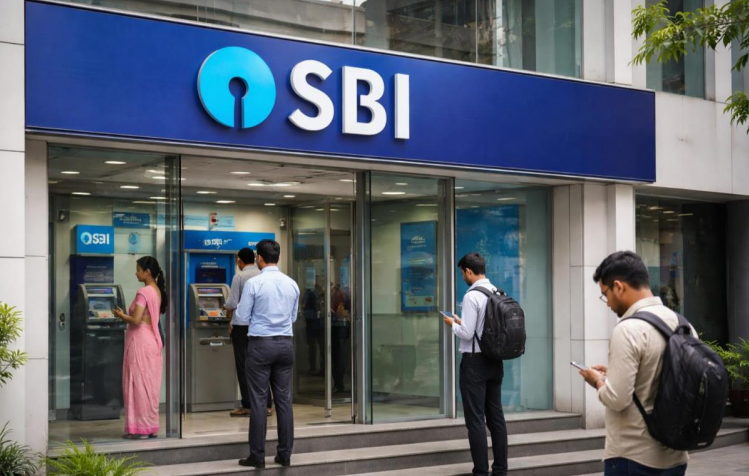
State Bank of India (SBI) is preparing to raise up to ₹75 billion (approximately $811 million) through a bond issuance as the bank seeks to strengthen its capital base and support continued credit expansion in the country’s rapidly growing financial sector.
According to market reports and banking sources, the fundraising exercise is expected to take place through the issuance of Additional Tier-1 (AT1) bonds, a form of capital instrument widely used by banks to meet regulatory capital requirements while maintaining lending capacity.


The planned bond sale comes at a time when India’s banking industry is witnessing strong loan demand across corporate, retail and infrastructure segments. As economic activity accelerates and credit growth expands, major lenders such as SBI Bond Issuance are seeking to maintain robust capital buffers in order to comply with regulatory standards set by the Reserve Bank of India (RBI). Strengthening capital positions is particularly important for banks with large lending portfolios and systemic importance within the national financial system.
SBI Bond Issuance proposed fundraising also reflects the broader transformation taking place in India’s banking landscape. Over the past decade, the government and regulators have pushed for stronger balance sheets, improved asset quality and higher capital adequacy ratios among public sector banks. With its dominant position in the market, SBI’s financial decisions are closely watched by investors, policymakers and analysts who view the bank as a key indicator of the health and stability of India’s financial system.
SBI’s Position in India’s Banking System
Founded in 1955, State Bank of India has grown into the largest commercial bank in India, with an extensive domestic and international presence. The bank operates more than 22,000 branches and over 65,000 ATMs across the country and maintains operations in numerous international markets.
With assets exceeding ₹55 trillion, SBI Bond Issuance plays a central role in financing infrastructure projects, supporting corporate expansion and providing banking services to millions of retail customers.
The institution’s influence extends far beyond traditional banking services. SBI Bond Issuance is a key participant in government initiatives such as financial inclusion programmes and digital banking expansion. Through schemes designed to extend financial access to rural and underserved populations, the bank has contributed significantly to India’s efforts to broaden participation in the formal financial system. Its scale and reach make it a cornerstone of India’s economic architecture.
Because of its systemic importance, SBI Bond Issuance must maintain strong capital levels to support its vast lending operations. Regulatory authorities require large banks to hold sufficient capital reserves to absorb potential losses and ensure financial stability during economic downturns. By issuing capital instruments such as AT1 bonds, SBI can raise funds without diluting shareholder equity while simultaneously strengthening its balance sheet.
Structure and Purpose of the Proposed Bond Issuance
The proposed fundraising is expected to involve Additional Tier-1 (AT1) bonds, a category of financial instruments designed to help banks strengthen their regulatory capital. These bonds are part of the capital structure defined under the Basel III banking regulations, which aim to ensure that banks maintain adequate capital buffers against financial risks.
AT1 instruments are typically perpetual bonds that do not have a fixed maturity date and may offer relatively higher yields to investors compared with conventional debt.
For SBI Bond Issuance, issuing AT1 bonds allows the bank to increase its Tier-1 capital, a crucial measure of financial strength used by regulators and credit rating agencies. Tier-1 capital represents the core capital of a bank, including equity and retained earnings, that can absorb losses without requiring the bank to cease operations.
Enhancing this capital base enables SBI Bond Issuance to continue expanding its lending activities while remaining compliant with regulatory capital requirements.
Market participants expect the bonds to attract strong demand from institutional investors, including mutual funds, insurance companies and pension funds seeking relatively high-yield fixed-income securities. AT1 bonds issued by major banks often appeal to investors because they provide higher returns than government bonds while still being associated with established financial institutions. However, these instruments also carry higher risk compared with traditional debt due to their loss-absorption features.
Credit Growth and Capital Needs in India’s Banking Sector
India’s banking system has experienced significant credit expansion in recent years, driven by strong economic growth, rising consumption and increased investment in infrastructure and manufacturing. Public sector banks, led by SBI Bond Issuance, have played a major role in financing large-scale projects in sectors such as energy, transportation and telecommunications.
As lending volumes increase, banks must continually reinforce their capital reserves to maintain prudent financial ratios.
The demand for capital has become even more important as India pursues ambitious economic development goals. Government initiatives aimed at boosting infrastructure spending, expanding manufacturing capacity and strengthening domestic supply chains require substantial financing from the banking sector. Institutions like SBI Bond Issuance are expected to provide a significant share of this funding, making capital adequacy a critical consideration.
Furthermore, the Indian banking system has undergone a period of structural reform aimed at improving asset quality and reducing non-performing loans. Over the past decade, regulators and policymakers have encouraged banks to strengthen risk management practices and maintain higher capital buffers. Bond issuances such as the one planned by SBI Bond Issuance are part of a broader strategy to ensure that banks remain resilient in the face of economic fluctuations and global financial uncertainty.
Investor Sentiment and Market Implications
Financial markets closely monitor fundraising initiatives by major banks because they provide insight into both institutional strategies and broader market conditions. SBI’s proposed bond issuance is expected to test investor appetite for bank capital instruments in the current economic environment.
Analysts anticipate strong participation from domestic institutional investors, reflecting confidence in the stability of India’s banking sector.
Bond markets in India have expanded significantly in recent years as companies and financial institutions increasingly turn to debt financing to support growth. Institutional investors such as mutual funds, insurance firms and pension funds have become major participants in the market, providing a stable demand base for corporate and financial bonds. SBI’s reputation and financial strength are likely to contribute to strong interest in the issuance.
At the same time, investors remain attentive to the risk characteristics associated with AT1 bonds. These instruments include features that allow banks to absorb losses by converting debt into equity or writing down the principal in extreme circumstances. While such mechanisms strengthen financial stability, they also introduce additional risk for investors, making pricing and yield levels important considerations in bond offerings.
Conclusion and Outlook
The planned ₹75 billion bond issuance by the State Bank of India represents an important step in strengthening the bank’s capital base as it continues to support India’s expanding economy.
By raising funds through AT1 bonds, SBI Bond Issuance aims to enhance its Tier-1 capital position while maintaining the flexibility needed to sustain credit growth across multiple sectors of the economy.
The move also highlights the evolving role of India’s bond markets in financing both corporate expansion and financial sector stability. As economic activity accelerates and demand for credit rises, banks are increasingly relying on capital market instruments to supplement traditional funding sources. SBI Bond Issuance fundraising effort reflects this broader shift toward diversified financing strategies within the banking system.
Looking ahead, the success of the bond issuance will depend on investor demand, market conditions and broader economic developments. If the offering attracts strong participation, it could reinforce confidence in India’s banking sector and encourage other financial institutions to pursue similar capital-raising initiatives.
Ultimately, the ability of major banks like SBI Bond Issuance to maintain strong capital positions will play a critical role in sustaining economic growth and financial stability in the years to come.


