
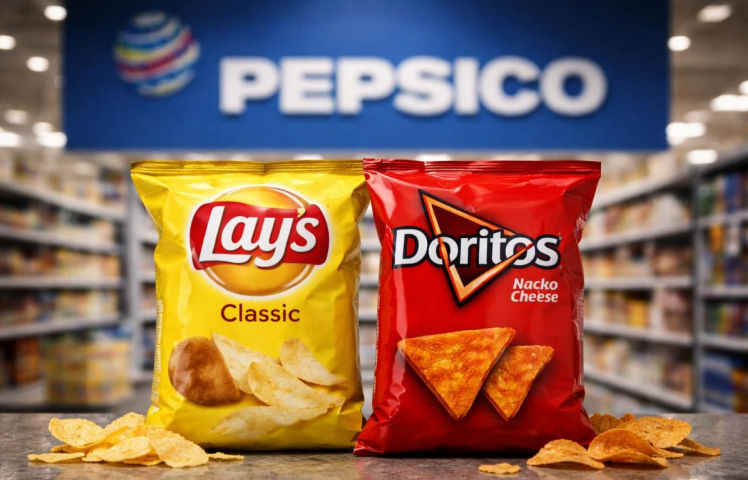
PepsiCo price cuts, one of the world’s largest food and beverage companies, announced today that it will reduce retail prices on its popular snack brands Lay’s and Doritos across key global markets, marking a rare strategic move in response to growing consumer price resistance. The decision comes amid rising concerns over inflationary pressures on household budgets and follows months of internal analysis showing the company’s snacks experiencing slower sales growth compared with previous quarters.
PepsiCo price cuts executives confirmed that price adjustments on key SKUs of Lay’s potato chips and Doritos tortilla chips will be implemented starting March 1, 2026, with targeted reductions ranging between 5% and 12% depending on product size and region. The company described the move as part of its broader effort to align pricing with evolving consumer expectations, while simultaneously protecting market share in highly competitive segments of the global snack foods industry.


Drivers of This Decision
PepsiCo’s price-cut announcement follows a sustained period of consumer pushback against rising snack prices that have outpaced wage gains in several major economies. Market research conducted by independent analytics firms indicated that lower- and middle-income consumers, in particular, were substituting premium snacks with lower-priced alternatives or reducing discretionary consumption altogether.
In statements released today, PepsiCo’s Chief Commercial Officer noted that the company had been monitoring purchasing patterns closely and saw a “significant attenuation” of snack volume growth in 2025 across North America, Europe and parts of Asia. She stated that “consumers are increasingly value-oriented, and our pricing strategy must reflect that reality, especially for frequently purchased items like Lay’s and Doritos.”
Industry analysts pointed to a broader slowdown in discretionary spending as households prioritise essential purchases amid persistent inflation in food, energy and housing costs. They argued that PepsiCo’s price adjustment could help stimulate demand and maintain brand loyalty, particularly among younger consumers facing tightened budgets.
Details of Price Adjustments and Strategic Rationale
Under the new pricing framework, Lay’s and Doritos products in standard retail sizes (such as 180-gram Lay’s bags and 200-gram Doritos bags) will see prices adjusted by 5% in the U.S. and Europe, and up to 10–12% in select developing markets where inflationary pressures have been most acute. PepsiCo’s pricing teams clarified that adjustments will be phased to ensure supply chain continuity and mitigate abrupt fiscal impacts on retail partners.
PepsiCo price cuts emphasised that the reductions will be absorbed partially through cost efficiencies in production, packaging innovations and distribution optimisation, rather than by lowering product quality. The company reiterated its commitment to maintaining snack quality while pursuing measures that enhance affordability.
A spokesperson for PepsiCo’s global snacks division said that “we are making these changes thoughtfully, balancing consumer affordability with sustainable profitability and long-term brand strength.” She added that PepsiCo price cuts had engaged in extensive market research and cross-functional planning to minimise disruption and ensure that the pricing strategy supports overall business objectives.
Retailer and Consumer Reactions
Retailers reacted positively to PepsiCo’s announcement, viewing the price cuts as a potential catalyst for renewed category growth. Major supermarket chains and convenience-store operators reported that the news had already generated increased foot traffic and heightened promotional conversations for snack aisles.
Several national retail associations in Europe and North America issued statements welcoming PepsiCo’s decision, noting that “price adjustments on staple snack items can support consumer confidence and help reinvigorate discretionary purchases in a challenging economic environment.” Some analysts warned, however, that price reductions may intensify competition among rivals in the salty snacks segment, pressuring other global and regional brands to reconsider their own pricing strategies.
Consumers also expressed approval of the move on social media platforms, with many noting that snacks like Lay’s and Doritos are frequent purchases and that price relief would make them more affordable within monthly budgets. Surveys conducted by independent consumer research groups suggested that more than 60% of surveyed snack buyers were likely to increase purchase frequency if prices were lowered by double-digit percentages.
Strategic Implications and Future Outlook
PepsiCo price cuts pricing shift is likely to have significant implications for the global snacks category. Industry watchers say that the move reinforces the importance of flexible pricing strategies and deep understanding of consumer sentiment in an inflationary context. It also reflects PepsiCo price cuts broader strategy to maintain market leadership by adapting to real-time economic conditions rather than relying solely on traditional brand strength.
PepsiCo price cuts finance teams noted that while unit margins may compress in the short term, the company anticipates offsetting volume growth and enhanced retail partnerships. Several executives highlighted that the strategy is consistent with PepsiCo price cuts longer-term goals of driving brand relevance and competitive differentiation through pricing, product innovation, and refined consumer targeting.
Looking to the months ahead, PepsiCo price cuts plans to monitor sales performance closely and make further adjustments as needed. The company’s growth forecast for 2026 projects a return to moderate year-over-year volume increases in the snacks division, contingent on effective execution of the new pricing strategy and broader market stability.
Conclusion
PepsiCo price cuts decision to cut prices on Lay’s and Doritos represents a strategic adjustment in response to shifting consumer behavior, competitive dynamics, and inflationary headwinds. By realigning pricing structures without compromising product quality, the company aims to sustain demand, bolster market share, and reinforce its role as a leading global snacks provider.
As the new prices take effect in March 2026, all eyes will be on how competitors respond and whether this pricing shift triggers a broader recalibration of snack pricing across global markets. The outcome could influence retail strategies, volume trends and consumer spending patterns well into the next fiscal cycle.


