
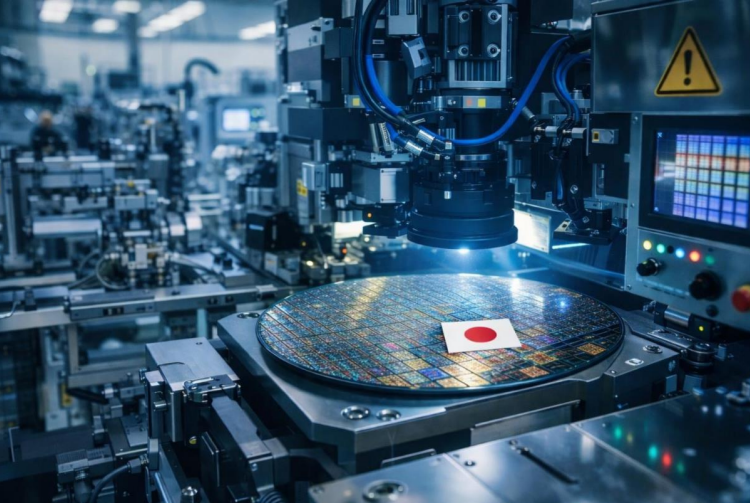
Japan Chip Controls has introduced a fresh round of export controls on advanced semiconductor manufacturing tools, expanding an earlier set of restrictions first imposed in 2023. The new measures announced by the Ministry of Economy, Trade and Industry (METI) add multiple lithography, etching, and wafer-processing systems to the list of items requiring government approval before export. Although not directly naming any country, the policy is widely interpreted as a tightening of technology flow toward markets deemed “high-risk,” particularly those with rising geopolitical and industrial competition, including China.
Officials stated that the revised list is designed to “ensure supply chain security and protect critical technological advantages” at a time when global chip manufacturing capacity and AI-related hardware are at the centre of economic and strategic influence. Industry analysts say the move positions Japan Chip Controls as a decisive actor in an increasingly fragmented global semiconductor environment, one defined by export controls, alliance-driven manufacturing blocs, and intensified competition for next-generation chip technologies.


Policy Framework Expands to Cover Advanced Manufacturing Tools
Japan Chip Controls latest controls add more than a dozen categories of semiconductor equipment to METI’s export approval system, including deep-ultraviolet (DUV) lithography tools, advanced plasma etchers, wafer inspection systems, and deposition machines used for leading-edge and mid-range chip production. Officials emphasised that these tools are essential for nodes at 14nm and below technologies central to AI accelerators, high-performance computing and defence-grade electronics.
METI’s statement described the update as part of Japan Chip Controls “responsibility as a technological leader” and stressed that the controls apply universally, not targeted at any single nation. However, experts note that more than 30% of Japan’s semiconductor equipment exports traditionally go to China, making the impact geographically concentrated despite official neutrality. By tightening the licensing process, Tokyo aims to both safeguard sensitive innovation and reinforce alignment with its strategic partners.
Industry observers point out that Japan Chip Controls export control philosophy has evolved significantly in the last decade from purely economics-driven to a hybrid strategy balancing national security, industrial policy and diplomatic coordination. The current expansion reflects this shift, signalling that Tokyo will remain a determinative voice in global technology governance.
Industry Giants Prepare for Revenue Shifts and Market Rebalancing
Leading Japanese semiconductor equipment manufacturers such as Nikon, Tokyo Electron and Screen Semiconductor Solutions are expected to face revenue recalibration as licensing becomes more stringent. Early assessments from market analysts suggest a potential short-term decline in sales to restricted markets, offset by growing demand from allied semiconductor production hubs.
Executives in the sector have expressed cautious confidence. Tokyo Electron noted that while export licensing can temporarily affect delivery schedules, long-term demand remains strong due to expanding fabrication capacity in the United States, Europe and Southeast Asia. Japan’s role as a supplier of essential mid-range tools also provides a buffer; even with increased restrictions, global fabs rely heavily on Japanese components, making the country an indispensable partner in the chipmaking ecosystem.
Financial projections indicate that Japan’s semiconductor equipment exports may increasingly pivot toward markets participating in US-Japan-EU technology coordination frameworks. This realignment, analysts say, reflects both shifting industrial strategy and the urgency of securing resilient chip supply chains in the face of geopolitical uncertainty.
Impact on China and Regional Chip Competition Intensifies
China currently investing heavily in domestic semiconductor development will likely feel significant consequences from Japan Chip Controls expanded measures. Although Chinese firms have accelerated local production of mid-range chip tools, Japanese systems remain vital for maintaining efficiency, yield and scale in advanced manufacturing. The newly restricted categories directly affect fabrication lines pushing toward smaller process nodes.
Beijing has publicly criticised earlier export controls imposed by Japan Chip Controls, referring to them as “politically motivated technological containment.” While official responses to the latest restrictions are still emerging, policy scholars predict that China may ramp up funding for indigenous equipment manufacturers and increase diplomatic engagement with alternative suppliers in Korea and Southeast Asia.
Strategists caution, however, that replacing Japanese expertise in high-precision lithography and wafer-processing remains a long-term project. In the near term, the widening technology gap could accelerate China’s push for “chip self-reliance,” further deepening global semiconductor fragmentation.
Global Semiconductor Alliances Strengthen Around Shared Security Goals
Japan Chip Controls decision aligns closely with parallel export-control efforts led by the United States and the European Union. Washington has encouraged partner nations to adopt coordinated restrictions on advanced chipmaking technology, arguing that protecting technological leadership is pivotal for shared national security. Japan’s move signals continued solidarity within these frameworks.
Diplomatic sources confirm that Tokyo consulted with counterparts in the US and the Netherlands, home to ASML, the world’s dominant lithography manufacturer, before finalising the expanded controls. This trilateral coordination represents a broader shift: semiconductor supply chain strategy is now intertwined with foreign policy, economic security and defence planning.
Experts predict that enhanced cooperation may extend to joint R&D investments, cross-border chip fabrication incentives, and common standards for export governance. With AI, quantum computing and 5G networks pulling chip demand forward, alignment among technology-producing democracies is becoming more structured and permanent.
Long-Term Outlook
METI officials emphasise that the export controls are not merely defensive but part of a larger strategy to strengthen Japan’s semiconductor industry. The country has been investing billions in domestic chip capacity from attracting foreign fabs to supporting next-generation materials research and advanced packaging technologies.
The Japanese government argues that safeguarding intellectual property is essential to sustaining its manufacturing advantage and enabling its long-term industrial revival. Prime Minister Fumio Kishida has repeatedly stressed that “economic security and technological leadership are inseparable,” underscoring the philosophical foundation behind the new policy.
Analysts view Japan Chip Controls actions as a signal that Tokyo intends to remain a global force in semiconductor innovation not only through production capacity but also through governance, diplomacy and standards-setting. As technology becomes increasingly central to global power balances, Japan Chip Controls is positioning itself firmly within the front line of strategic chip policy.


