
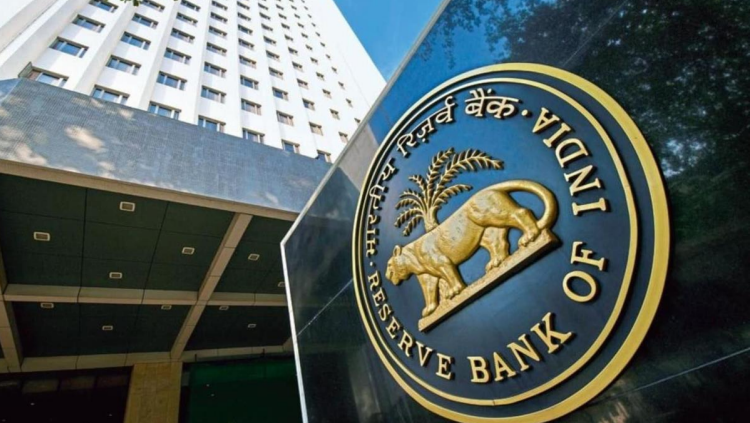
India is poised to continue with its 4% inflation target for the central bank, a decision that would reinforce policy continuity at a time when global economies are grappling with persistent price pressures, volatile capital flows, and uneven growth. The target, which anchors India inflation target monetary policy framework, is due for its five-year review in 2026, and indications suggest that policymakers favour stability over recalibration.
The inflation target is jointly set by the government and the Reserve Bank of India (RBI), forming the backbone of India inflation target regime introduced in 2016 and renewed in 2021. Retaining the current benchmark would signal confidence in the framework’s ability to balance price stability with growth imperatives in a complex global environment.


Why the Inflation Target Matters
The 4% inflation target is more than a numerical benchmark; it serves as the primary anchor for monetary policy decisions, influencing interest rates, liquidity conditions, and inflation expectations across the economy.
For households, it shapes borrowing costs and purchasing power. For businesses, it affects investment planning, pricing strategies, and long-term contracts. For financial markets, it provides a predictable policy signal that reduces uncertainty.
By keeping inflation close to 4%, policymakers aim to avoid the twin risks of runaway prices and excessive monetary tightening. A higher target could weaken price discipline and erode household savings, while a lower target might constrain growth by forcing tighter financial conditions. The existing target therefore represents a carefully calibrated middle path tailored to India inflation target structural characteristics.
Assessment of the Current Framework
Over the past decade, India inflation target regime has helped bring greater discipline and transparency to monetary policy. While inflation has occasionally breached the tolerance band due to food and fuel shocks, the framework has improved communication between policymakers and markets, anchoring expectations more effectively than in the pre-2016 era.
Supporters of retaining the 4% target argue that the framework has matured and earned credibility. They note that deviations from the target have largely been driven by supply-side factors, such as weather-related food inflation and global commodity spikes, rather than demand excesses. In this context, altering the target could introduce unnecessary uncertainty without addressing the root causes of inflation volatility.
Growth, Stability and the Policy Trade-Off
India inflation target economic outlook remains relatively strong compared to many major economies, with growth driven by domestic demand, public investment, and expanding manufacturing and services sectors. Policymakers are keen to ensure that inflation control does not come at the cost of derailing this momentum.
Retaining the 4% target allows the central bank to continue pursuing a data-driven approach, adjusting interest rates gradually rather than reacting abruptly to short-term price fluctuations. This flexibility is particularly important for a developing economy like India inflation target, where structural transitions, demographic dynamics, and infrastructure expansion require sustained investment and stable financial conditions.
Implications for Markets, Borrowers and Investors
For financial markets, continuity in the inflation target reduces policy uncertainty and supports stable bond yields and currency expectations. Government borrowing costs, which are closely linked to inflation expectations, are likely to remain more predictable under an unchanged framework.
Borrowers—both households and corporates—benefit from clearer interest-rate signals, aiding long-term financial planning. For foreign investors, the decision would reinforce confidence in India inflation target macroeconomic management, an important factor as the country seeks to attract sustained capital inflows amid global risk aversion.
Outlook Ahead of the Review
As the formal review approaches, discussions are expected to focus less on changing the numerical target and more on strengthening complementary policies such as improving food supply chains, reducing energy import vulnerability, and enhancing fiscal-monetary coordination. These measures can help smooth inflation volatility without altering the core framework.
If the 4% target is retained, it would underscore India inflation target commitment to policy consistency, institutional credibility, and long-term macroeconomic stability. In an era of global economic uncertainty, such continuity could prove to be a strategic advantage—supporting growth while keeping inflation expectations firmly anchored.
In the long-term perspective, the likely decision to maintain the inflation target reflects a broader confidence in India inflation target monetary architecture. Rather than chasing short-term adjustments, policymakers appear focused on preserving a framework that has gradually strengthened the economy’s resilience and predictability over time.


