
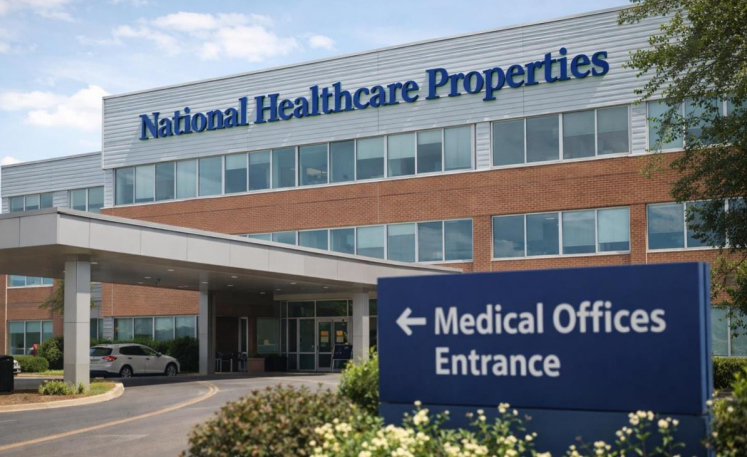
National Healthcare Properties, a U.S.-based real estate investment trust (REIT), has formally filed for an initial public offering, marking a significant move in the evolving global IPO landscape. The company’s decision to go public comes at a time of heightened market volatility, driven by geopolitical tensions, inflationary pressures, and a broader reassessment of technology sector valuations.
The IPO filing reflects a growing trend in which investors are shifting capital toward sectors perceived as stable and less exposed to rapid technological disruption. Unlike high-growth technology firms, Healthcare REIT IPO real estate offers predictable cash flows and long-term demand drivers, making it increasingly attractive in uncertain market conditions.


National Healthcare Properties’ entry into the public market is therefore not just a corporate milestone but also a reflection of changing investor priorities. As global markets adjust to new economic realities, the IPO is positioned at the intersection of demographic demand, financial strategy, and sectoral rotation.
Company Profile and Portfolio Strength
National Healthcare Properties operates as a self-managed REIT focused on senior housing and healthcare-related real estate assets. Its portfolio includes 37 senior housing communities and 130 outpatient medical facilities across 29 U.S. states, highlighting its broad geographic presence and diversified asset base.
The company’s business model is anchored in long-term leasing structures and stable occupancy demand, particularly in Healthcare REIT IPO facilities that serve essential services. This provides a relatively predictable revenue stream, distinguishing it from more cyclical real estate segments.
Additionally, the company benefits from favorable demographic trends, particularly the rapid growth of the U.S. population aged 65 and above. As Healthcare REIT IPO demand rises with an aging population, assets such as senior housing and outpatient facilities are expected to experience sustained demand, strengthening the company’s long-term growth prospects.
IPO Strategy and Market Positioning
The IPO is being managed by leading financial institutions, including Wells Fargo Securities, Morgan Stanley, and BMO Capital Markets, reflecting strong institutional backing for the offering. The company plans to list on the Nasdaq under the ticker “NHP”, positioning itself within the U.S. public equity markets.
The timing of the IPO is particularly strategic. Market analysts suggest that the IPO window is currently more favorable for companies operating in “real economy” sectors such as real estate and Healthcare REIT IPO, which are seen as less vulnerable to the volatility affecting technology stocks.
The move also follows the successful listing of similar Healthcare REIT IPO, such as Janus Living, which raised $966 million and saw its stock rise nearly 20% post-listing. This precedent underscores strong investor appetite for healthcare-focused real estate investments.
Market Trends: Shift Toward Defensive Sectors
The broader IPO market has undergone a noticeable shift in recent months, with investors increasingly favoring sectors that offer stability and predictable returns. This trend is partly driven by concerns over the long-term valuation of technology companies amid rapid advancements in artificial intelligence.
Healthcare REITs, in particular, have emerged as a “bright spot” due to their relatively uncorrelated performance, strong dividend yields, and resilience to economic fluctuations. These characteristics make them attractive to institutional investors seeking to balance risk in volatile markets.
Moreover, the ongoing global economic uncertainty has reinforced the importance of asset-backed investments. Real estate linked to essential services, such as healthcare, is increasingly viewed as a defensive play, capable of delivering consistent returns even during periods of market stress.
Growth Drivers and Long-Term Outlook
One of the key factors supporting National Healthcare Properties’ growth is the demographic shift toward an aging population. Individuals aged 65 and above represent the largest consumers of Healthcare REIT IPO services, creating sustained demand for facilities such as senior housing and outpatient care centers.
Additionally, limited new construction in the senior housing sector has created supply constraints, further enhancing the value of existing assets. This imbalance between supply and demand is expected to drive higher occupancy rates and rental income over time.
The company’s diversified portfolio across multiple states also reduces geographic risk and provides exposure to various regional markets. This diversification strengthens its resilience against localized economic downturns and enhances its appeal to investors seeking stable returns.
Conclusion
The IPO of National Healthcare Properties represents a significant development in the global financial landscape, reflecting both company-specific ambitions and broader market dynamics. As investors increasingly prioritize stability and long-term value, Healthcare REIT IPO real estate is emerging as a key area of focus.
In the near term, the success of the IPO will depend on market conditions, investor sentiment, and the company’s ability to effectively communicate its growth strategy. However, strong fundamentals and favorable industry trends position it well for a positive reception.
Looking ahead, the listing is likely to reinforce the growing importance of Healthcare REIT IPO infrastructure as an investment asset class. As demographic trends continue to drive demand, companies like National Healthcare Properties are expected to play a central role in shaping the future of real estate and Healthcare REIT IPO investment markets.


