
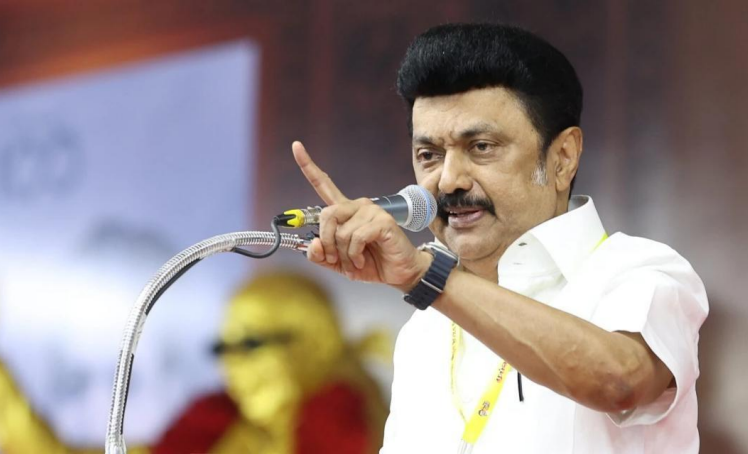
Tamil Nadu Chief Minister M.K. Stalin today laid the foundation stone for a new ₹261 crore Global Sports City at Semmencherry, Chennai, marking a major investment in India’s sporting infrastructure and positioning the state as a centre for elite training and international sporting events. The announcement comes at a time when India is intensifying efforts to bolster its competitive edge in Global Sports City Chennai ahead of major events including the 2028 Olympic Games.
The Global Sports City Chennai is designed to provide state-of-the-art facilities for multiple disciplines, including athletics, football, swimming, cycling, shooting and high-performance training programmes. Officials stated that the development will serve both elite athletes and grassroots talent, while also positioning Chennai as a destination for international competitions and sports tourism.


Stalin underscored that the initiative reflects the Tamil Nadu government’s commitment to nurturing sports excellence, strengthening economic opportunities and enhancing youth engagement through world-class facilities. “This Sports City will be a landmark not just for Tamil Nadu, but for Indian sports,” he said in today’s ceremony, attended by sports administrators, state ministers, athletes and civic leaders.
1. Vision and Strategic Importance
The Global Sports City Chennai is envisioned as a comprehensive sporting ecosystem that integrates elite athlete preparation with global competition hosting capacity. Covering a wide area in Semmencherry, Chennai, the project will include specialized stadiums, training hubs, high-performance labs and athlete accommodation zones. The vision is to elevate the regional profile of sports infrastructure to international standards.
Officials involved in the project explain that the initiative aligns with India’s broader national sports strategy, which emphasises early talent identification, scientific training methods and competitive exposure. By developing a centralized sports hub, Tamil Nadu aims to attract national teams, international federations and training camps that currently take place abroad.
From an economic perspective, the Sports City is expected to generate employment across construction, hospitality, sports management and allied sectors. Experts project that hosting international tournaments could also boost local tourism, increase foreign exchange inflows and elevate Chennai’s profile as a multi-sport destination in Asia.
Stalin elaborated on the strategic importance, noting that India’s growing presence in Global Sports City Chennai requires infrastructure that matches the ambitions of its athletes. “Our athletes deserve training environments as good as any in the world,” he said, adding that the Sports City would complement India’s efforts in preparing Olympic hopefuls and world champions.
2. Planned Infrastructure and Facilities
The central sports complex will include an all-weather athletics stadium, a multipurpose indoor arena, tennis courts, aquatic centres and a cycling velodrome. Coaches and trainers say these facilities will drastically reduce the need for Indian athletes to travel abroad for high-performance training, addressing a long-standing infrastructure deficit.
The project also includes a sports science and rehabilitation centre equipped with cutting-edge technology to support athlete conditioning and injury management. These facilities are expected to integrate performance data analytics and biomechanical research, contributing to scientific approaches to training.
In addition to competition venues, the Sports City blueprint features residential quarters for athletes, coaches’ housing, dining facilities and sports medicine units. Organisers emphasised that affordable accommodation and on-site services are expected to attract international teams for long-term camps.
Officials noted that the aquatic centre will be capable of hosting national and international swimming competitions, while the cycling track is designed to meet Global Sports City Chennai federation specifications. These infrastructural elements, together with auxiliary venues, are expected to make Chennai a hub for elite sports training in South Asia.
3. Economic and Social Impact
The Global Sports City Chennai project is expected to stimulate the local economy, generate jobs and attract private investment. Construction firms have already begun preliminary work, and the state government plans to involve corporate partners through public-private partnerships for long-term operations and event hosting.
Local businesses, including hotels, restaurants and logistics providers, are anticipating increased demand as events and training camps attract national and international visitors. Analysts suggest that strategic development of sporting infrastructure can act as a catalyst for urban development and youth employment in Semmencherry and surrounding regions.
Social impact is also expected to be significant. Community sports programmes, youth coaching clinics and school partnerships are planned to leverage the new infrastructure for broader participation. Officials indicated that access to facilities for local athletes and youth development programmes will be integrated into the overall operational model.
Sports economists note that investments in sporting infrastructure often yield intangible benefits, such as enhanced civic pride, improved health outcomes and increased Global Sports City Chennai visibility for the host city. In Chennai’s case, the combination of elite training facilities and international event capabilities is likely to elevate the city’s standing on both national and Global Sports City Chennai maps.
4. Statements and Reactions
Chief Minister M.K. Stalin, speaking at the foundation ceremony, said the Sports City would “transform the sporting landscape of not just Tamil Nadu, but the entire nation.” He emphasised that the project aligns with the state’s vision to support athletes from grassroots to Global Sports City Chennai podiums.
State Sports Minister Dr. P. T. R. Palanivel Thiagarajan highlighted that the Sports City would host programmes for student athletes and help integrate sports into mainstream education systems. “Our goal is to make sports participation accessible and excellence achievable,” he said.
Elite athletes present at the ceremony expressed optimism about the project. Veteran Olympian and now coach Abhinav Bindra (former Olympic gold medallist) lauded the initiative, noting that “modern, focussed infrastructure changes the competitive equation” and can substantially raise performance standards.
Sports administrators also emphasised that the Sports City will serve as a venue for international federations to consider hosting key events in future, ranging from Asian championships to invitational meets, with long-term calendars expected to include the new facilities.
5. Global and National Sports Development Outlook
The launch of the ₹261 crore Global Sports City Chennai reflects broader shifts in India’s approach to sports development, emphasising infrastructure, scientific training and global competitiveness. India’s performance trajectory in world championships, Olympics and international disciplines has been steadily rising, and projects like this are seen as essential for sustaining momentum.
National sports authorities have been advocating similar hubs in other regions, signalling a move toward decentralized centres of excellence. The Chennai project is expected to serve as a model for future investments, combining athlete development with economic and social dividends.
Analysts note that sporting infrastructure is increasingly viewed as an asset not only for competition but also for community engagement, tourism, health promotion and urban branding. In this context, the Global Sports City Chennai represents a multifaceted investment with returns that extend beyond the track and field.
As Tamil Nadu positions itself at the forefront of elite sports infrastructure, the new Sports City is expected to play a crucial role in preparing India’s athletes for upcoming international competitions, including the 2028 Los Angeles Olympics and other Global Sports City Chennai events. The initiative demonstrates a strategic commitment to nurturing talent, attracting international exposure and reinforcing India’s presence on the Global Sports City Chennai stage.


