
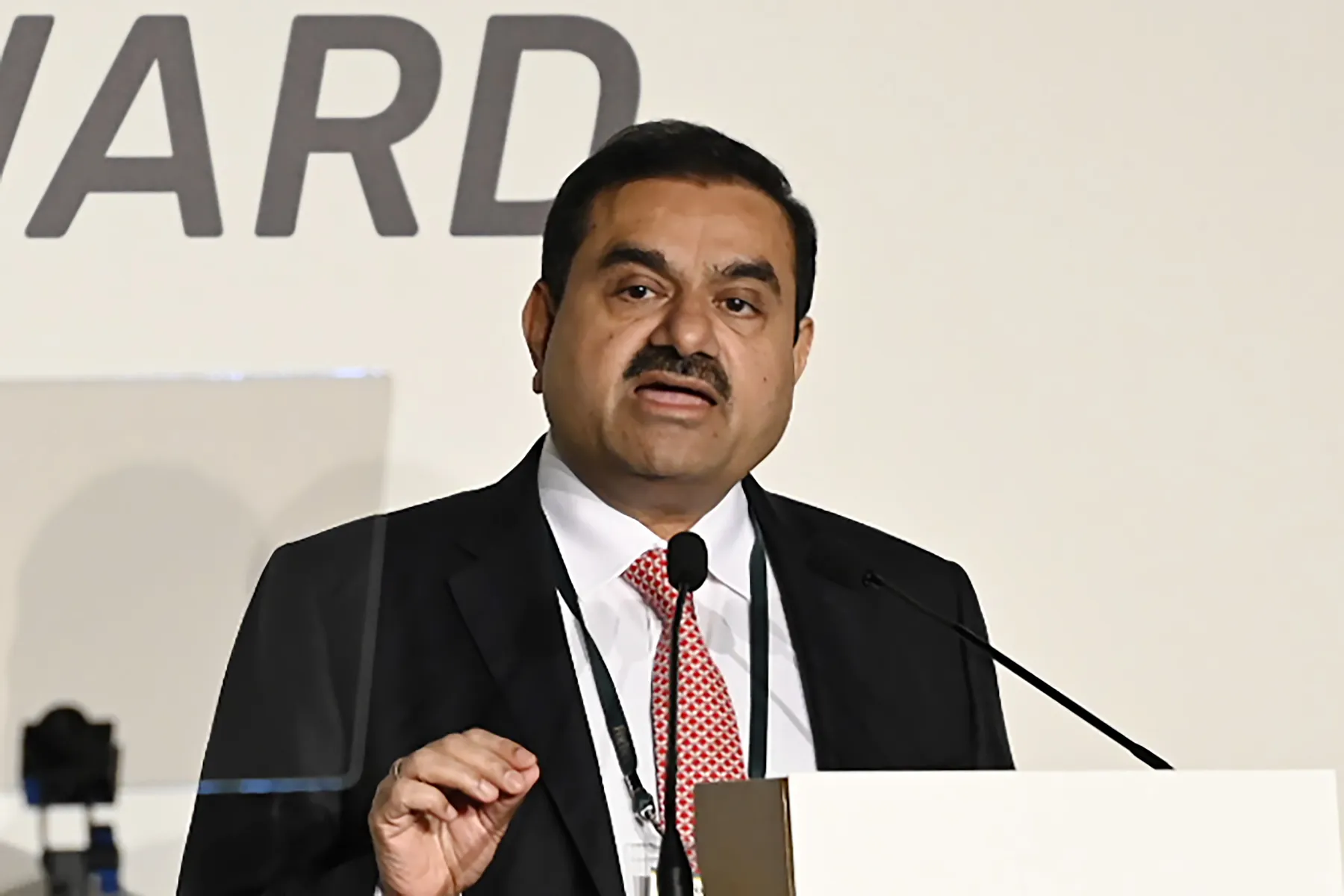
Adani Enterprises shares jumped sharply on Wednesday after its airport subsidiary, Adani Airport Holdings Ltd. (AAHL), entered into binding agreements to raise around $1 billion, or ₹9,825 crore, through a primary equity investment from a consortium of prominent global and domestic investors. The deal has boosted investor sentiment and highlighted the growing importance of the airport business within the Adani Group’s infrastructure portfolio.
Adani Enterprises Shares Rise After $1 Billion Airport Fundraise
Shares of Adani Enterprises Ltd. gained strongly during Wednesday’s trading session following the announcement. The stock rose more than 4% at one point, reaching around ₹3,085 on the BSE, while other market reports also recorded gains of more than 6% during intraday trading. The positive movement came after the company’s airport arm announced the major capital-raising transaction.


The fundraising involves Adani Airport Holdings Ltd., a subsidiary of Adani Enterprises and one of India’s largest private airport operators. AAHL will raise approximately ₹9,825 crore through the issue of new equity shares to a consortium comprising Alpha Wave Global, Premji Invest, Temasek and funds managed by BlackRock.
The transaction values Adani Airport Holdings at approximately $18 billion on a pre-money equity valuation basis, providing an important external institutional valuation benchmark for the airport business.
Who Is Investing in Adani Airports?
The investor consortium brings together several major institutional names with significant experience in global and Indian investments.
Temasek, Singapore’s state-owned investment company, is among the investors participating in the transaction. BlackRock-managed funds, along with Alpha Wave Global and Premji Invest, will also subscribe to newly issued shares.
Once all three investment tranches are completed, the investor consortium is expected to collectively hold approximately 5.54% of Adani Airport Holdings. The final tranche is expected to be completed by July 2027, subject to customary closing conditions and regulatory approvals.
The participation of these institutional investors is particularly significant because it provides long-term capital to the airport business while also offering an independent market-based reference for its valuation.
How Will Adani Airports Use the $1 Billion?
The fresh capital will primarily support the expansion and modernisation of Adani Airports’ existing infrastructure.
The company plans to increase airport capacity significantly to meet India’s growing air travel demand. AAHL is targeting the ability to handle approximately 200 million passengers annually as its airport network expands.
The funds will also support the development of Adani Airport City, an integrated commercial and urban development concept around airports. The company plans approximately 22 million square feet of mixed-use development in the first phase.
Such developments can include retail, hospitality, offices, entertainment, commercial spaces and other passenger-oriented services. This strategy is designed to help airports generate revenue beyond traditional aviation activities.
Focus on Non-Aeronautical Revenue
Another important part of the expansion strategy is the growth of non-aeronautical businesses.
Airports can generate revenue not only from passenger and aircraft-related activities but also from areas such as retail, food and beverages, advertising, parking, lounges, ground handling and other passenger services.
Adani Airports plans to scale these businesses alongside its core airport operations. Increasing non-aeronautical revenue can potentially help the company diversify its income sources and improve the overall commercial value of its airport assets.
Adani Airports’ Growing Presence in India
Adani Airport Holdings currently operates eight airports in India, including Mumbai International Airport. The company has rapidly expanded its presence in India’s aviation infrastructure market over the past several years.
The airport portfolio gives Adani Airports exposure to some of India’s largest and fastest-growing passenger markets. According to the company, its network currently accounts for more than 23% of India’s passenger traffic, while Reuters reported that its airports account for roughly 25% of passenger traffic and 33% of air cargo volumes.
The expansion comes at a time when India’s aviation sector is experiencing strong long-term demand, supported by rising incomes, increased domestic travel, expanding regional connectivity and growing demand for air cargo.
Why India’s Airport Sector Is Becoming Attractive
India’s aviation industry has become an important infrastructure opportunity as passenger numbers continue to rise and more people choose air travel for domestic and international journeys.
Growing urbanisation and economic activity are also creating demand for better airport infrastructure. As airports become more than transportation hubs, their surrounding commercial developments can create additional opportunities for businesses and investors.
For operators such as Adani Airports, this creates the opportunity to combine airport operations with retail, hospitality, commercial real estate and passenger services.
The company’s plan to expand its annual capacity to around 200 million passengers reflects its expectations for continued growth in the Indian aviation market.
Adani Airports Eyes Further Expansion
The latest fundraising could also strengthen Adani Airports’ ability to participate in future airport opportunities.
The Indian government is expected to offer additional airports under public-private partnership arrangements. Adani Airports has indicated that it intends to participate in upcoming opportunities, while also exploring greenfield airport projects.
The company is also looking selectively at international opportunities, although its immediate expansion strategy remains strongly focused on increasing its footprint and capacity within India.
This makes the $1 billion capital infusion strategically important because it gives the airport business additional financial resources at a time when the sector is entering another phase of infrastructure expansion.
Deal Follows Adani Enterprises’ ₹15,000 Crore QIP
The airport fundraising comes shortly after another major capital-market transaction by Adani Enterprises.
In July 2026, Adani Enterprises completed a ₹15,000 crore qualified institutional placement (QIP), described as India’s largest QIP by a non-financial corporate.
The latest airport transaction therefore represents another significant flow of institutional capital into the group’s businesses.
For investors, the combination of the QIP and the airport fundraising indicates that Adani Enterprises continues to focus on strengthening its balance sheet and funding expansion across infrastructure and emerging businesses.
What the Deal Means for Adani Enterprises Investors
The airport business is one of the key growth platforms within Adani Enterprises’ portfolio. The fresh investment could help accelerate expansion without relying entirely on debt financing.
The participation of major institutional investors may also be viewed positively by the market because it demonstrates willingness among long-term investors to commit capital to the airport platform.
At the same time, investors will continue to monitor the execution of the company’s expansion plans, capital expenditure, passenger growth, airport profitability and the pace at which new commercial projects are developed.
The $18 billion pre-money valuation also gives the market a useful reference point when assessing the potential value of Adani Airports.
Possible Impact on Adani Group’s Airport Strategy
The transaction could mark an important stage in the evolution of Adani Airports from an airport operator into a broader infrastructure and consumer-facing platform.
The company’s strategy involves developing airports as integrated ecosystems rather than focusing exclusively on passenger movement. Airport cities, retail spaces, hospitality, advertising, parking and ground-handling operations can create multiple revenue streams around the core aviation business.
If passenger traffic continues to grow as expected, these additional businesses could become increasingly important to the company’s overall financial performance.
Investor Confidence in Focus
The entry of global investors such as Temasek and BlackRock-managed funds is also significant from a confidence perspective.
The transaction provides Adani Airports with long-duration institutional capital and places a market valuation on the business. It also comes at a time when Adani Enterprises is expanding several businesses across infrastructure, energy, data centres, green hydrogen and other emerging sectors.
The airport deal could therefore attract greater attention from investors looking to gain exposure to India’s infrastructure and consumption-growth story.
What Investors Should Watch Next
Following the announcement, investors are likely to focus on several developments.
First, the completion of the three investment tranches will be important. The final tranche is expected by July 2027. Investors will also watch the pace of airport modernisation and capacity expansion.
Second, the development of the planned Airport City projects will be closely monitored because they could become an important source of non-aeronautical revenue.
Third, passenger traffic growth and the performance of individual airports will remain key indicators of the business’s long-term potential.
Finally, any future airport acquisitions, government airport privatisation opportunities or international expansion plans could influence the valuation and growth outlook of Adani Airports.
Adani Enterprises Shares: What Comes Next?
The immediate market reaction suggests that investors welcomed the airport fundraising announcement. However, sustained gains in Adani Enterprises shares will ultimately depend on the company’s ability to convert the fresh capital into profitable growth.
The airport business has ambitious targets, including increasing annual passenger-handling capacity to around 200 million and developing large-scale airport-city projects. Successfully executing these plans could strengthen the contribution of airports to Adani Enterprises’ overall business portfolio.
Investors will therefore be watching not only the stock price but also operational performance, cash flows, expansion costs and returns from the airport business.
Conclusion
Adani Enterprises shares jumped after Adani Airport Holdings announced a $1 billion fundraising deal with a consortium comprising Temasek, BlackRock-managed funds, Alpha Wave Global and Premji Invest. The ₹9,825 crore primary equity investment values AAHL at approximately $18 billion before the new capital and will give the airport business additional resources for expansion and modernisation.
The funds will support airport capacity expansion, the development of the Adani Airport City project and the growth of non-aeronautical businesses. With the company targeting capacity of around 200 million passengers annually, the deal could become an important milestone in Adani Airports’ long-term growth strategy.
For Adani Enterprises, the transaction strengthens one of its major infrastructure businesses and brings marquee institutional investors into the airport platform. The focus will now shift toward execution, passenger growth, commercial revenue expansion and the successful deployment of the newly raised capital.
Disclaimer: This article is for informational purposes only and should not be considered investment advice. Investors should conduct their own research and consult a qualified financial adviser before making investment decisions.
To read more such news visit: BusinessPress, Indias Most Loved Business News Portal