
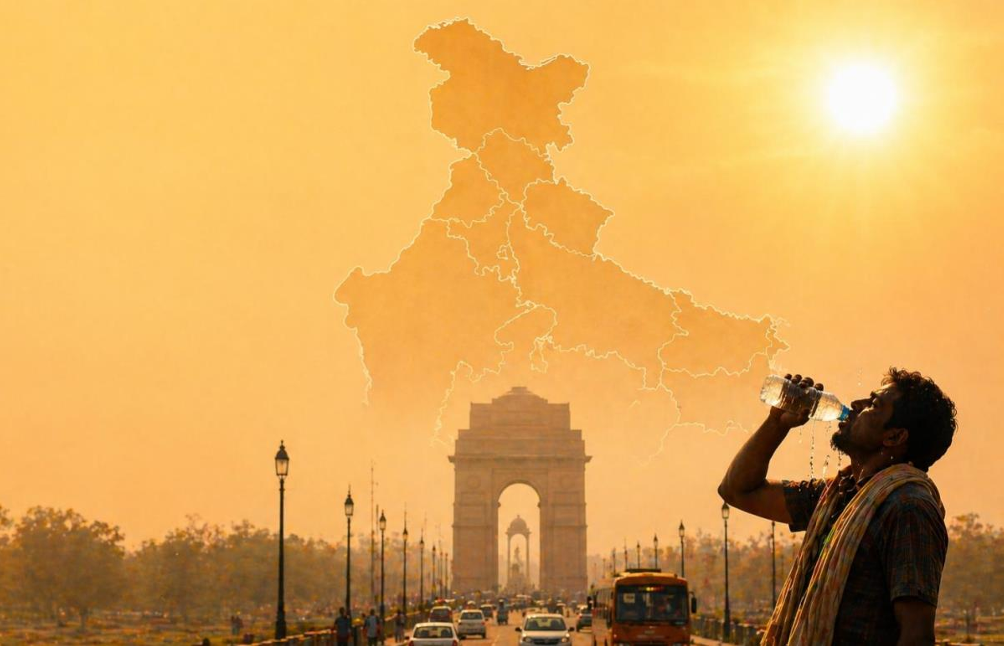
India is currently facing an intense and widespread India heatwave, with temperatures soaring well above seasonal norms across multiple regions.
From the plains of North India to central and western states, extreme heat conditions have placed significant strain on public health systems, energy infrastructure, and daily life.


The India Meteorological Department (IMD) has issued multiple alerts, warning of continued high temperatures in the coming days.
In several parts of the country, daytime temperatures have crossed 45°C, particularly in states such as Rajasthan, Uttar Pradesh, Madhya Pradesh, and parts of Delhi-NCR.
The prolonged India heatwave has not only increased discomfort but also raised serious concerns about heat-related illnesses, water scarcity, and agricultural stress.
The persistence of these conditions reflects a broader pattern of rising climate extremes across the subcontinent.
However, there is cautious optimism as meteorological forecasts indicate short-term relief in parts of North India, with rain and thunderstorms expected over the next few days.
While this relief is likely to be temporary, it offers a brief respite for millions affected by the ongoing heatwave.
Extent and Intensity of the Heatwave
The current India heatwave has been described as one of the most widespread of the season, affecting a large swath of the country simultaneously.
According to IMD data, temperatures in several cities are running 3°C to 6°C above normal, with India heatwave conditions officially declared in multiple districts.
Urban centers such as Delhi, Jaipur, and Lucknow have experienced prolonged periods of extreme heat, with nighttime temperatures also remaining unusually high.
This phenomenon, known as “warm nights,” prevents the body from recovering from daytime heat exposure, increasing the risk of heat exhaustion and related health issues.
The intensity of the India heatwave has also been amplified by dry winds and low humidity levels in northern and central regions.
These conditions accelerate dehydration and make outdoor activities particularly hazardous, prompting authorities to issue advisories urging people to stay indoors during peak afternoon hours.
Meteorological Factors and Climate Trends
The persistence of the India heatwave is linked to a combination of meteorological factors, including the formation of a high-pressure system over northern India.
This system suppresses cloud formation and rainfall, allowing temperatures to rise unchecked.
Additionally, delayed western disturbances—weather systems that typically bring relief to northern India—have contributed to the prolonged dry spell.
Without these disturbances, the region has experienced uninterrupted heat buildup over several days.
Experts also point to broader climate change trends as a contributing factor.
Rising global temperatures have increased the frequency and intensity of heatwaves in India.
Studies indicate that such extreme weather events are becoming more common, with longer durations and wider geographic impact, posing new challenges for climate resilience and adaptation.
Impact on Public Health and Daily Life
The ongoing India heatwave has had a significant impact on public health, with hospitals reporting an increase in cases of heatstroke, dehydration, and related illnesses.
Vulnerable populations, including the elderly, children, and outdoor workers, are particularly at risk.
Authorities in several states have issued guidelines to mitigate the impact, including:
• Adjusting school timings
• Advising against outdoor work during peak hours
• Setting up cooling centers and water distribution points
The India heatwave has also disrupted daily life, with power demand surging to record levels as households and businesses rely heavily on air conditioning and cooling systems.
This increased demand has put pressure on electricity grids, raising concerns about potential outages in some regions.
Agriculture, Water Stress, and Economic Effects
The extreme heat is also taking a toll on agriculture, particularly in regions dependent on timely rainfall.
High temperatures can damage crops, reduce yields, and increase irrigation requirements, placing additional strain on already limited water resources.
Water scarcity has become a growing concern in several states, with reservoirs and groundwater levels under pressure.
The combination of high temperatures and limited rainfall has intensified the risk of drought-like conditions in some areas.
Economically, the India heatwave has implications for productivity and labor efficiency.
Outdoor industries such as construction and agriculture are particularly affected, as workers face reduced working hours and increased health risks.
The cumulative impact of these factors could influence economic output in affected regions.
Expected Relief and Forecast Outlook
Meteorological forecasts offer a degree of relief for northern India, with rain and thunderstorms expected in parts of the region over the coming days.
States such as Punjab, Haryana, Himachal Pradesh, and parts of Uttar Pradesh are likely to experience temporary cooling due to these weather systems.
However, experts caution that this relief will be short-lived.
Temperatures are expected to rise again after the brief spell of rain, as underlying climatic conditions remain unchanged.
The IMD has indicated that India heatwave conditions may persist in several regions, particularly in central and western India.
Looking ahead, the focus will be on monitoring weather patterns and implementing adaptive measures to manage the impact of extreme heat.
Long-term strategies, including improved urban planning, water management, and climate resilience initiatives, will be essential to address the growing challenge of heatwaves in India.
Outlook
The current heatwave underscores the increasing vulnerability of India to extreme weather events and highlights the urgent need for comprehensive climate adaptation strategies.
While short-term relief in northern regions may provide temporary respite, the broader pattern of rising temperatures remains a cause for concern.
The situation calls for coordinated efforts across government agencies, healthcare systems, and communities to mitigate the impact of heatwaves.
Public awareness, infrastructure improvements, and policy interventions will play a critical role in enhancing resilience.
As India navigates this challenging period, the lessons learned from the current India heatwave will be crucial in shaping future responses to climate extremes.
The ability to adapt and respond effectively will determine how well the country can manage the growing risks associated with a warming climate.