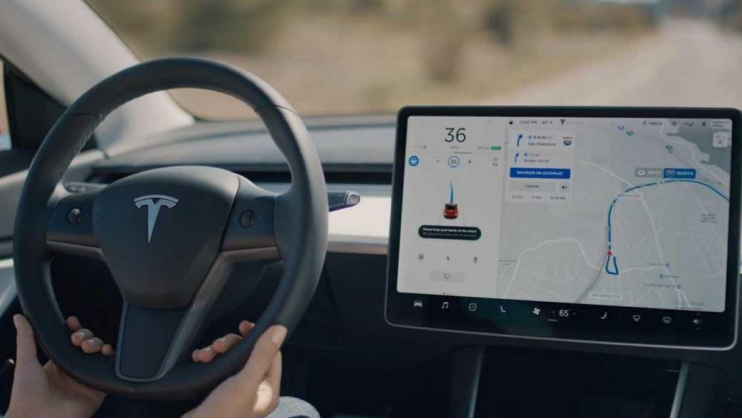
Tesla FSD Europe has achieved a major regulatory breakthrough in Europe, securing approval from Dutch authorities to deploy its Full Self-Driving (FSD) Supervised software on public roads in the Netherlands. The decision marks the first authorization of Tesla’s advanced driver-assistance system in Europe, representing a critical milestone in the company’s global expansion strategy.
The approval, granted by the Dutch vehicle authority RDW after more than 18 months of testing and evaluation, allows Tesla FSD Europe vehicles to operate with automated steering, braking, and acceleration—provided drivers remain attentive and ready to intervene.


This development is widely viewed as a gateway to broader adoption across the European Union. With the Netherlands acting as a regulatory entry point, Tesla FSD Europe is now positioning itself to push for EU-wide approval, which could significantly reshape the region’s autonomous driving landscape.
Tesla FSD EuropeBreakthrough in European Regulatory Approval
The Dutch approval represents a historic first for Tesla FSD Europe in a region known for its stringent automotive safety regulations. Unlike the United States, where regulatory frameworks are comparatively flexible, European authorities impose rigorous testing and validation requirements before allowing deployment of advanced driver-assistance systems.
The RDW’s decision followed an extensive review process involving real-world testing, safety analysis, and system validation, ensuring that Tesla’s software meets the high standards required for public road use. The system, branded as “FSD Supervised,” is designed to assist rather than replace the driver, with continuous monitoring mechanisms in place.
Officials emphasized that when used correctly, the technology can enhance road safety by supporting driver decision-making, rather than removing human control. This distinction has been central to gaining regulatory acceptance in Europe, where full autonomy remains tightly restricted.
Technology Capabilities and Operational Framework
Tesla’s FSD Supervised system represents one of the most advanced driver-assistance technologies currently available in the consumer market. The software enables vehicles to perform a range of functions, including lane navigation, traffic response, automatic braking, and acceleration, across both highways and urban environments.
However, the system is not classified as fully autonomous. Drivers are required to remain engaged at all times, with built-in monitoring systems ensuring attentiveness. Before activation, users must complete a tutorial and acknowledge that the system does not eliminate the need for human oversight.
Tesla FSD Europe approach differs from many competitors by relying primarily on camera-based vision systems and artificial intelligence, rather than combining multiple sensor types such as lidar and radar. This strategy has been both a point of innovation and a subject of regulatory scrutiny, particularly in safety-conscious markets like Europe.
Strategic Importance for Tesla’s Business Model
The approval is a crucial step in Tesla’s long-term strategy, which increasingly centers on software-driven revenue streams. CEO Elon Musk has repeatedly emphasized that self-driving technology and robotaxis are central to Tesla’s future valuation, with significant potential to generate recurring income through subscriptions and services.
Tesla’s European market performance has faced challenges in recent years, including slowing sales and rising competition from both traditional automakers and Chinese EV manufacturers. The introduction of FSD in Europe is expected to revitalize consumer interest and differentiate Tesla’s offerings in a crowded market.
Market analysts have suggested that regulatory approval could lead to increased adoption of Tesla vehicles, particularly as consumers gain access to advanced features that were previously unavailable in the region. This could play a key role in reversing declining sales trends and strengthening Tesla’s position in Europe.
Pathway to EU-Wide Expansion
The Netherlands’ approval is not an isolated development but part of a broader regulatory process that could extend across the European Union. The RDW has indicated that it will submit the system for EU-level validation, after which member states will vote on whether to adopt the technology.
If approved at the EU level, Tesla FSD Europe system could be deployed across multiple countries without requiring separate national approvals, significantly accelerating its rollout. Even in the absence of a unified decision, individual countries may choose to adopt the technology independently.
Tesla FSD Europe has expressed confidence that wider approval could be achieved in the coming months, with the company aiming to expand availability throughout Europe. Such a development would mark a turning point in the adoption of advanced driver-assistance systems across the region.
Conclusion and Outlook
Tesla FSD Europe successful approval in the Netherlands represents a landmark moment in the evolution of autonomous driving in Europe. By meeting the region’s stringent regulatory standards, the company has demonstrated the viability of its technology in one of the world’s most demanding markets.
In the short term, attention will focus on the rollout of the system in the Netherlands and its real-world performance. The outcomes of this deployment will likely influence regulatory decisions in other European countries and shape the pace of broader adoption.
Looking ahead, the approval signals a broader shift in the global automotive industry, where software innovation and regulatory alignment are becoming as critical as hardware engineering. As Tesla FSD Europe continues to push for EU-wide authorization, the success of this initiative could redefine the competitive landscape of autonomous mobility in Europe and beyond.