
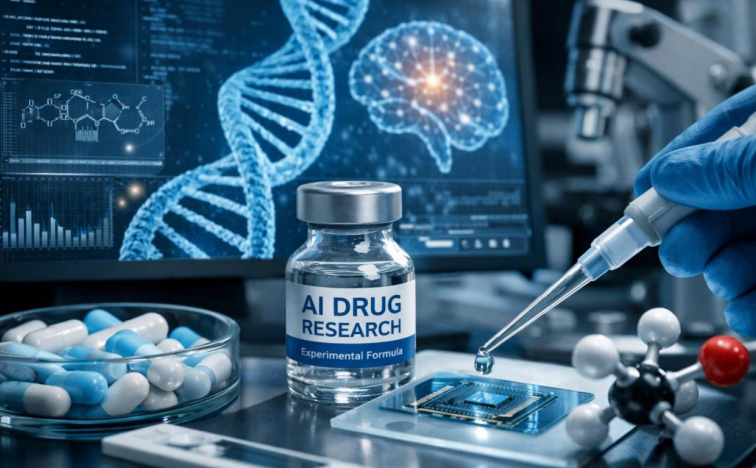
A major breakthrough in pharmaceutical innovation has emerged as Eli Lilly deepens its collaboration with Insilico Medicine, in a deal valued at up to $2.75 billion. This expanded partnership underscores the growing convergence of AI Drug Discovery development, a trend rapidly reshaping the global healthcare industry.
The agreement builds upon an existing relationship that began in 2023 with an AI software licensing deal, later strengthened by a research collaboration in late 2025. The latest expansion now integrates advanced AI Drug Discovery directly into Lilly’s development pipeline, marking a shift from experimental collaboration to large-scale commercial integration.


At its core, the deal reflects a broader transformation in pharmaceutical research. With rising costs, long development cycles, and high failure rates in traditional AI Drug Discovery, companies are increasingly turning to AI to accelerate innovation. This partnership represents not only a financial milestone but also a strategic pivot toward data-driven medicine, with implications for global healthcare systems.
Structure of the Agreement and Financial Terms
The newly announced agreement is structured as a multi-billion-dollar licensing and collaboration deal, with total potential value reaching approximately $2.75 billion. Insilico Medicine will receive an upfront payment of $115 million, followed by additional milestone-based payments tied to development progress, regulatory approvals, and commercial success.
In addition to milestone payments, the agreement includes tiered royalties on future drug sales, ensuring long-term revenue participation for Insilico. This financial structure reflects a risk-sharing model, where both companies benefit from successful AI Drug Discovery commercialization while distributing development risks across stages.
Crucially, the deal grants Eli Lilly exclusive global rights to develop, manufacture, and commercialize selected AI Drug Discovery candidates discovered using Insilico’s AI platform. These candidates are currently in preclinical stages, indicating that the partnership is focused on early-stage innovation with long-term commercial potential.
AI-Driven Drug Discovery and Technological Edge
At the heart of the collaboration lies Insilico’s proprietary AI engine, which is designed to accelerate AI Drug Discovery by integrating data from biomarkers, biological systems, and predictive life models. This technology enables researchers to identify potential drug targets faster and with greater precision than traditional laboratory methods.
According to Insilico’s founder and CEO Alex Zhavoronkov, the company’s AI systems can identify multi-purpose therapeutic targets across multiple diseases simultaneously, a capability that could significantly reduce research timelines and costs.
The collaboration also aligns with broader industry trends, where pharmaceutical companies are leveraging AI to design molecules, predict clinical outcomes, and optimise AI Drug Discovery pipelines. By combining Insilico’s AI-driven discovery with Lilly’s clinical development expertise, the partnership aims to create a fully integrated innovation pipeline, from digital modelling to real-world therapies.
Strategic Objectives and Therapeutic Focus
The partnership is expected to focus on oral therapeutic candidates across multiple disease areas, including metabolic disorders, oncology, and chronic conditions. Reports suggest that one area of interest may include GLP-1-based treatments for diabetes and obesity, a rapidly growing segment in global pharmaceuticals.
For Eli Lilly, the collaboration provides access to a pipeline of AI-generated drug candidates, enabling the company to expand its portfolio beyond internally developed compounds. This is particularly significant as competition intensifies in areas such as weight-loss drugs and chronic disease treatments.
For Insilico, the partnership represents a major step toward commercial validation of AI-driven drug discovery, transitioning from a technology provider to a key player in global pharmaceutical innovation. The company has already developed over 28 AI-generated drug candidates, with several progressing into clinical stages.
Industry Impact and Shift Toward AI in Pharma
The expanded Lilly–Insilico partnership reflects a broader industry shift toward AI-led research and development, as pharmaceutical companies seek to reduce costs and improve efficiency. Traditional AI Drug Discovery can take 10–15 years and billions of dollars, whereas AI-driven approaches promise significantly shorter timelines and lower costs.
This trend is also supported by regulatory developments, including efforts by the U.S. Food and Drug Administration (FDA) to reduce reliance on animal testing and encourage innovative research methods. AI technologies are increasingly seen as a viable alternative for early-stage experimentation and predictive modelling.
Moreover, the deal highlights growing investment in health-tech convergence, where biotechnology, artificial intelligence, and data science intersect. As more pharmaceutical companies adopt AI-driven strategies, the industry is moving toward a future where digital tools play a central role in medical innovation.
Conclusion
The expansion of the Eli Lilly–Insilico Medicine partnership marks a defining moment in the evolution of pharmaceutical research. By committing up to $2.75 billion to AI Drug Discovery, the companies are signaling a strong belief in the transformative potential of artificial intelligence in healthcare.
Looking ahead, the success of this collaboration will depend on the translation of AI-generated insights into clinically effective therapies. While early-stage results are promising, the true test will lie in regulatory approvals, large-scale clinical trials, and eventual market adoption.
Nevertheless, the broader trajectory is clear. As AI continues to integrate into AI Drug Discovery, partnerships like this are likely to become more common, reshaping the pharmaceutical landscape. The Lilly–Insilico deal may well serve as a blueprint for the future of medicine, where innovation is driven as much by algorithms as by laboratories.


