

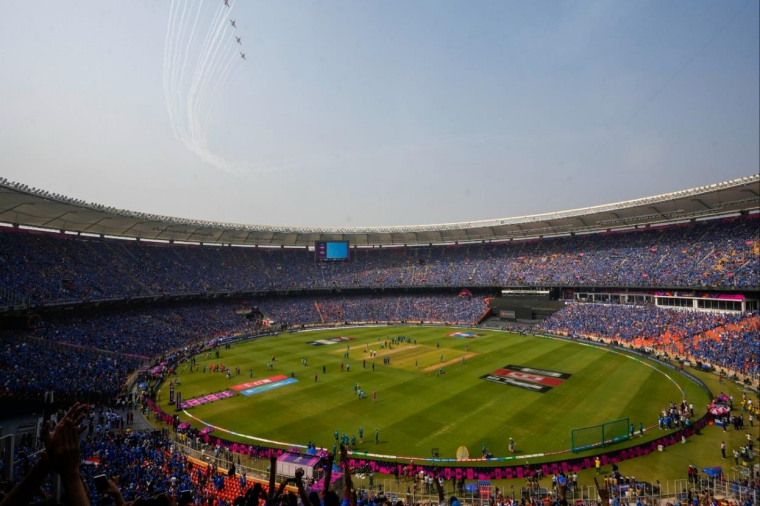
As the cricketing world turns its attention to the subcontinent, preparations intensify for the ICC Men’s T20 World Cup 2026, scheduled to begin in the first week of February 2026. Co-hosted by India and Sri Lanka, this edition marks one of the largest iterations of the tournament, featuring 20 teams, expanded match schedules and reinforced global participation. With new venues, heightened rivalries and structural changes introduced by the ICC, expectations for this World Cup are at an all-time high.
A Tournament of Unprecedented Scale
The T20 World Cup 2026 represents one of the most ambitious global cricketing events ever staged. The ICC formally approved the expanded 20-team structure in 2024, laying the groundwork for a broader international footprint. As co-hosts, India and Sri Lanka will collectively stage over 55 matches across 15 venues, bringing together both traditional cricketing giants and emerging associates.


For India, this marks the first T20 World Cup 2026, when the tournament delivered record attendance numbers and broadcast figures. Government agencies project an economic impact exceeding ₹15,000 crore, supported by tourism, hospitality, merchandising, transport and media rights. Officials have also highlighted infrastructure upgrades, including refreshed stadium facilities, expanded hospitality boxes and digital fan-engagement platforms.
Sri Lanka, hosting for the first time since 2012, has invested in upgraded pitch technology, crowd-movement systems and stadium lighting, ensuring world-class conditions across venues such as Colombo, Kandy and Galle. Sri Lankan Cricket has stated that the World Cup offers a “decade-defining opportunity to revitalize cricket tourism” following years of economic fluctuation.
India’s Preparations and Squad Expectations
India enters the T20 World Cup 2026 tournament under intense scrutiny from fans and experts alike. After heartbreak in previous knockout stages, the pressure to secure a T20 World Cup 2026 title for the first time since 2007 is immense. The BCCI selection committee is expected to announce the provisional squad by early February, with training camps already underway in Bengaluru and Mumbai.
Key players being closely watched include the established batting core and a new generation of fast bowlers who have performed strongly in recent bilateral series. Analysts believe the balance between experience and youthful talent will define India’s prospects. While selectors have remained tight-lipped, insiders suggest that fitness metrics, domestic T20 World Cup 2026 performance data and adaptability on subcontinental pitches will heavily influence final squad decisions.
A senior board official remarked privately that “consistency, leadership presence and multi-skill adaptability will determine India’s composition for 2026,” hinting at a possible shift toward all-round capacity in the middle order.
Sri Lanka’s Hosting Role and Competitive Ambition
For Sri Lanka, the 2026 World Cup offers both hosting prestige and a chance to re-establish itself as a formidable T20 World Cup 2026 contender. The country has recently invested heavily in player development pathways and revamped domestic T20 World Cup 2026 leagues, producing promising young pace bowlers and adaptable spinners.
Sri Lankan Cricket officials have emphasised that the World Cup is not only a sporting event but a national opportunity to revive tourism and international engagement. Stadium authorities have confirmed that major renovation works, especially in Colombo and Pallekele, were expedited in late 2025 to ensure the facilities meet the ICC’s highest tier of standards.
On the competitive front, Sri Lanka’s campaign will likely revolve around a blend of experienced batters and a rejuvenated bowling attack. With home conditions favouring spin and tactical play, the team’s strategy could hinge on exploiting slower surfaces and pressure-phase bowling at crucial match moments.
Global Contenders, Group Dynamics and Tournament Format
The expanded 20-team format introduces a more complex and competitive structure. Teams will be divided into four groups of five, followed by a Super 8 stage, semi-finals and the final. This ensures more competitive fixtures for emerging cricketing nations while increasing the unpredictability of the early stages.
Historically strong teams such as Australia, England, Pakistan, South Africa and New Zealand are expected to mount formidable challenges. The ICC has hinted at revised seedings based on a combination of rankings and performance cycles from 2023 to 2025, ensuring balanced distribution across groups.
Broadcast projections suggest record viewership, particularly for marquee fixtures such as India vs Pakistan, Australia vs England and high-stakes South Asian derbies. Industry estimates predict peak global audience figures crossing 800 million cumulative live viewers.
Security, Logistics, Fan Experience and Innovation
Given the magnitude of the event, both India and Sri Lanka have bolstered security and logistical arrangements. The Ministry of Home Affairs has coordinated with state police, central intelligence units and foreign liaison officers to implement a multilayer security protocol.
Stadiums in Mumbai, Kolkata, Ahmedabad, Pune, Colombo and Kandy have introduced advanced turnstile scanning, biometric ticket verification and live crowd density monitoring systems. Enhanced medical and emergency services have also been deployed.
Fan engagement will be a central theme of the 2026 tournament. Organisers have introduced digital experience zones, augmented-reality viewing pods, interactive statistics dashboards and AI-powered highlight generators, making this the most technologically integrated cricket event ever hosted in the region. Hospitality sales have already crossed 65% occupancy across premium stands, with certain India fixtures expected to sell out completely within hours of the final schedule announcement.
Outlook
As the ICC Men’s T20 World Cup 2026 approaches, momentum is building not only among fans and players but also across the political, economic and sporting landscapes of the two host nations. With fresh infrastructure, heightened competition and expanded international participation, the tournament is set to showcase the evolution of T20 World Cup 2026 as a truly global sport.
India views the event as a chance to reassert its cricketing dominance and leverage the tournament’s economic footprint. Sri Lanka sees it as an avenue to revive its international cricketing stature and re-energise national tourism. For the ICC, this World Cup represents a significant step in expanding the sport’s reach through broader qualification pathways and deeper competitive diversity.
With the first matches only days away, teams are finalising strategies, fans are preparing for a month-long festival, and anticipation is rapidly building for what many expect to be the most globally impactful T20 World Cup 2026 ever staged.


