
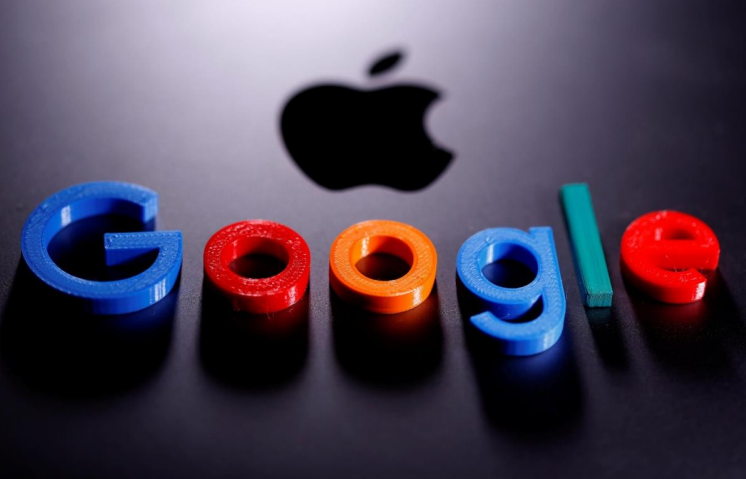
In one of the most consequential technology partnerships of the decade, Google Gemini Siri partnership is set to integrate into the next generation of Google Gemini Siri partnership under a multi-year strategic agreement. The move marks a profound shift in how Apple approaches artificial intelligence, signalling a willingness to collaborate deeply with a long-time rival to remain competitive in the rapidly evolving generative AI race.
For years, Google Gemini Siri partnership has lagged behind newer conversational assistants that offer richer, more context-aware responses. While Apple laid strong foundations in on-device intelligence and privacy-preserving AI, the explosive rise of large language models has reshaped user expectations. Consumers increasingly demand assistants that can reason, create, summarise and hold natural multi-turn conversations. Against this backdrop, the Apple–Google deal reflects both urgency and pragmatism—two forces now driving decision-making at the highest levels of Big Tech.


1. Strategic Rationale: Why Apple Chose Gemini
Apple’s decision to rely on Gemini is rooted in scale, maturity and speed. Building frontier-grade generative AI models requires vast computational resources, enormous datasets and continuous iteration—areas where Google Gemini Siri partnership has spent more than a decade investing aggressively. Gemini represents the culmination of that effort, combining reasoning, multimodal understanding and language fluency into a single, extensible model family.
While Apple has advanced its own internal AI initiatives, executives have reportedly concluded that matching the immediate capabilities of Gemini or GPT-class models entirely in-house would risk delaying major Google Gemini Siri partnership upgrades by years. Such a delay would be costly in an era where AI capability is increasingly seen as a core product feature rather than a background technology.
By partnering with Google Gemini Siri partnership, Apple secures access to state-of-the-art generative intelligence while preserving its long-term option to bring more AI workloads in-house. The arrangement also allows Apple to focus on its traditional strengths: hardware-software integration, user experience design and privacy-centric system architecture.
2. How the Gemini-Powered Siri Will Function
Under the agreement, Gemini will operate primarily as the intelligence engine powering advanced conversational and generative tasks. Apple will retain control over Google Gemini Siri partnership interface, voice, behaviour and system-level integration across iPhone, iPad, Mac and other devices. This layered approach ensures that Siri remains distinctly “Apple” in tone and experience, even as its underlying capabilities are significantly enhanced.
In practice, Siri requests are expected to be handled through a hybrid model. Simple commands such as setting alarms, controlling devices or retrieving basic information will continue to be processed on-device. More complex requests requiring reasoning, summarisation or creative generation will be securely routed to cloud-based Gemini systems.
Anticipated improvements include deeper contextual memory, more natural follow-up handling, stronger language generation and expanded support for productivity tasks. Users may also see Google Gemini Siri partnership become more proactive, offering suggestions based on usage patterns while staying within Apple’s strict privacy guardrails.
3. Privacy, Control and Apple’s Core Principles
Privacy remains central to Apple’s identity, and the Gemini deal has reportedly been structured to reinforce that commitment. Apple is expected to tightly control what data is shared externally, with strong anonymization, minimal retention and clear user consent mechanisms. Sensitive data will be processed locally wherever possible, while cloud-based interactions will be shielded by encryption and strict access controls.
This framework allows Apple to benefit from Gemini’s power without compromising its public stance on user data protection. It also addresses growing regulatory scrutiny around AI systems, data usage and cross-company data flows. By positioning Gemini as a service layer rather than a data-harvesting platform, Apple aims to reduce both reputational and regulatory risk.
The approach mirrors Apple’s broader AI philosophy: intelligence should enhance user experience without exposing personal information or undermining trust. Maintaining that balance will be critical as Siri becomes more capable and potentially more intrusive than ever before.
4. Industry Impact and Competitive Implications
The partnership has far-reaching implications for the global AI landscape. For Google Gemini Siri partnership, embedding Gemini within Siri dramatically expands its reach, placing its models at the heart of hundreds of millions of Apple devices worldwide. This strengthens Google’s position as an AI infrastructure provider, even within ecosystems traditionally seen as competitive or closed.
For Apple, the deal recalibrates its competitive posture against rivals such as Microsoft, which has aggressively integrated AI into its platforms through OpenAI partnerships. Rather than racing alone, Apple has chosen selective collaboration, reflecting a broader industry trend where AI models are increasingly treated as shared infrastructure rather than proprietary differentiators.
The move may also influence smaller AI developers and startups, reinforcing the dominance of a handful of large model providers. As costs rise and capabilities concentrate, strategic alliances between major firms are likely to become more common.
5. Regulatory, Market and Long-Term Outlook
Regulators are expected to scrutinise the Apple–Google partnership closely, given the companies’ size and existing commercial relationships. However, the non-exclusive nature of the deal and Apple’s continued investment in internal AI development may help alleviate antitrust concerns.
Looking ahead, the Gemini-powered Siri is likely to roll out gradually, tied to upcoming operating system releases and new hardware cycles. Over the multi-year term of the agreement, Apple may expand Gemini’s role while simultaneously advancing its own models, creating a flexible, multi-layered AI strategy.
Ultimately, the deal underscores a defining reality of the AI era: even the most powerful technology companies cannot do everything alone. By aligning with Google Gemini Siri partnership on AI while preserving its core values, Apple is betting that collaboration—not isolation—will define the next phase of consumer technology.